
Scope 3 Litigation: What the Latest French Court Ruling Means for Businesses
Published on 01 Jul, 2026
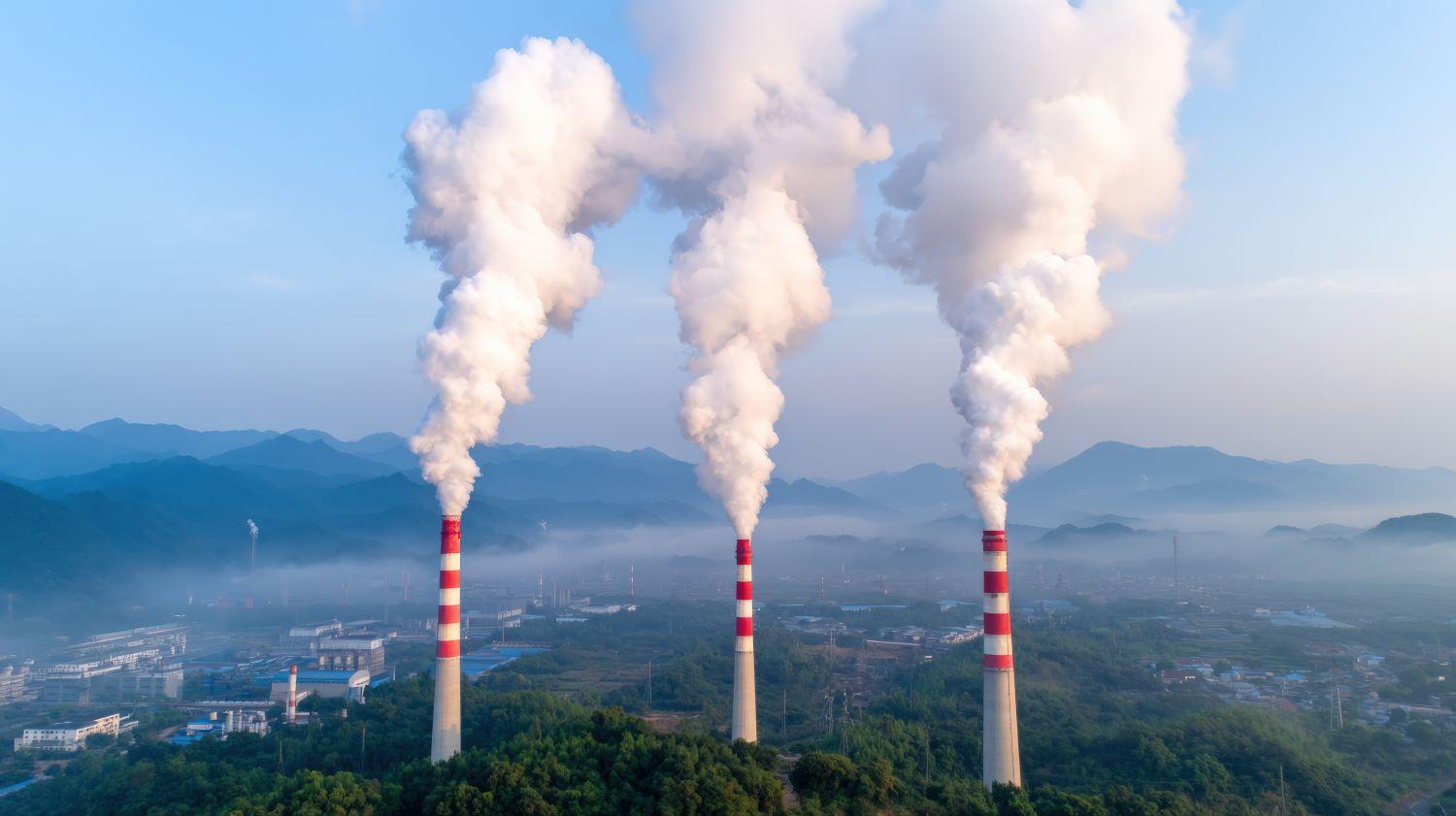
For years, the most contested frontier in corporate climate accountability has been Scope 3 the emissions that occur not within a company's own operations or its direct energy supply, but across its entire value chain: upstream in the suppliers that produce its inputs, and downstream in the customers that use its products. Companies have reported Scope 3 with varying degrees of rigour, omitted it with varying degrees of justification, and argued about its boundaries with varying degrees of conviction. The underlying logic of excluding it from legal accountability has always been the same: you cannot be held responsible for what someone else does with what you sell them.
A French court has just challenged that logic in a ruling that every general counsel, sustainability director, and board member in a carbon-intensive industry should read carefully. The Paris Judicial Court has ordered a major energy producer to update its legally mandated vigilance plan to include measures addressing the climate risks arising from customers' use of its oil and gas products: Scope 3, category 11, downstream emissions, giving the company six months to comply. The court did not mandate specific production cuts or exploration bans. But what it did mandate is, in some respects, more significant: a formal legal obligation to identify, assess, and disclose measures to manage the climate risk embedded in what your customers do with your products after they buy them.
The Duty of Vigilance and what it actually requires
To understand the weight of this ruling, it helps to understand the legal framework it sits within. France's duty of vigilance law, adopted in 2017, requires large companies to establish and implement a vigilance plan covering their own operations, their subsidiaries, and their suppliers and subcontractors. The plan must identify risks to human rights and fundamental freedoms, to health and safety, and to the environment and set out measures to prevent and mitigate those risks. Non-compliance can result in injunctions, and companies can be held civilly liable for damage caused by a failure to implement adequate vigilance measures.
The law was designed primarily to extend corporate accountability into supply chains the upstream dimension. What this ruling does is extend that logic downstream, into the end-use of products. The court has found that a company selling products whose use generates significant greenhouse gas emissions has a vigilance obligation that encompasses those emissions. The climate risk does not end at the point of sale. The obligation to identify and address it does not either.
This is not the first climate litigation ruling in Europe, and it will not be the last. But it represents a meaningful shift in the specific legal mechanism being applied. Previous climate cases have largely argued in terms of human rights frameworks, constitutional obligations, or general environmental law. This ruling operates through a corporate governance and due diligence instrument, one that already has established legal standing and a compliance enforcement mechanism. That makes it more immediately actionable and harder to dismiss as a novel or speculative legal theory.
Why this matters beyond the energy sector
The immediate instinct will be to read this as an energy sector story. It is not, or not only. The duty of vigilance law applies to any large company with significant operations or supply chains in France. And the legal and regulatory architecture being built around corporate environmental accountability in France through the vigilance law, across the EU through the Corporate Sustainability Due Diligence Directive (CSDDD), and increasingly through analogous frameworks in Germany, Norway, and beyond consistently points in the same direction: extended liability, downstream as well as upstream.
Consider the implications for any manufacturer whose products, when used, generate significant emissions. An industrial equipment maker whose machinery burns fossil fuels. A chemicals producer whose products are embedded in energy-intensive processes. A materials company whose outputs are used in carbon-intensive construction or manufacturing. In each case, the emissions generated by customers' use of the product sit in Scope 3, category 11. Under a vigilance or due diligence framework that extends downstream, the question of whether those emissions create a legal obligation is no longer entirely theoretical.
The ruling does not establish that every company is now liable for every Scope 3 emission. It establishes that, under the right legal instrument, with the right level of materiality, a court can and will require a company to integrate downstream use-phase emissions into its formal risk management and due diligence obligations. That is a materially different legal environment from the one that existed before this ruling was handed down.
The Scope 3 data problem just became a legal risk
Here is the practical implication that most organisations have not yet fully absorbed: you cannot manage a legal obligation you cannot measure.
Most large companies' Scope 3 category 11 figures downstream emissions from the use of sold products are among the least reliable numbers in their emissions inventories. They are typically estimated from product sales volumes and assumed use patterns, using generic emission factors that may or may not reflect how customers actually use the product in practice. The margin of error is substantial. The underlying data infrastructure is, in most cases, rudimentary.
If downstream use-phase emissions are becoming a legal obligation rather than merely a reporting exercise, that data quality problem has a different kind of consequence. A company that cannot credibly identify, quantify, and monitor the climate risks arising from customers' use of its products cannot credibly demonstrate that its vigilance plan adequately addresses them. And a vigilance plan that does not adequately address material climate risks is, under this legal framework, non-compliant, not just incomplete.
The upgrade required is not primarily a reporting upgrade. It is an operational and data infrastructure upgrade: understanding, at a level of specificity that can survive legal scrutiny, how your products are used, by whom, in what quantities, generating what emissions, in what jurisdictions. That is a fundamentally different requirement from producing an annual Scope 3 emissions figure for a sustainability report.
What a Transition Plan looks like under legal scrutiny
The ruling also has significant implications for corporate climate transition plans. Over the past several years, transition planning has evolved from a voluntary best practice to an expected component of corporate sustainability strategy and increasingly, under frameworks like the EU's Corporate Sustainability Reporting Directive (CSRD) and the UK's transition plan guidance, a formal disclosure requirement.
But transition plans have largely been written for investor and reporting audiences. They are structured to demonstrate ambition, communicate targets, and satisfy disclosure frameworks. They have not, in general, been written to withstand legal scrutiny, to demonstrate that the company has identified specific climate risks, assessed their materiality, and implemented concrete measures to address them in a way a court could evaluate.
That is what this ruling implicitly demands. A vigilance plan that adequately addresses downstream Scope 3 climate risk cannot be a narrative document about long-term ambition. It must identify specific risk pathways, assess their severity and likelihood, describe concrete mitigation measures, and include a monitoring and review process. That is, effectively, a transition plan written to the standard of a legal due diligence document rather than an investor communication.
The gap between those two standards, for most companies, is significant. And the direction of travel more countries adopting due diligence legislation, more courts interpreting it expansively, more NGOs and civil society organisations with the legal infrastructure to bring cases suggests that gap needs to close faster than most transition planning timelines currently anticipate.
The Litigation Risk is no longer speculative
Climate litigation has been a growing feature of the legal landscape for a decade. What has changed is the specificity and enforceability of the instruments being used. Early climate cases relied on broad constitutional rights or policy arguments that courts were reluctant to adjudicate. The current wave of litigation operating through duty of vigilance laws, corporate due diligence directives, and consumer protection frameworks uses established legal instruments with existing enforcement mechanisms, specific compliance obligations, and clear remedies.
This ruling will be appealed, and its ultimate scope will be shaped by the proceedings that follow. But the significance of the judgment does not depend on its final outcome. It depends on the legal principle it has established in an enforceable jurisdiction: that downstream, post-sale emissions can create a formal legal obligation, under an existing corporate governance framework, that a court will enforce. That principle, once established, does not disappear regardless of what happens on appeal.
Companies that are treating climate litigation as a reputational risk to be managed through communications strategy are misreading the environment they are operating in. It is becoming a legal and operational risk that requires the same internal infrastructure as any other material legal obligation: rigorous data, defensible methodology, documented governance, and a management process that a court could inspect and find adequate.
How Aranca can help you
Aranca's ESG Strategy, Net Zero & Decarbonisation solution help organisations build the Scope 3 data infrastructure, value chain risk assessment, and transition planning frameworks that can withstand not just investor and regulatory scrutiny, but the emerging legal standard that rulings like this are beginning to establish. If your current approach to downstream emissions is a reporting exercise rather than a risk management one, now is the right time to close that gap.