
Japan’s Wagyu Exports: Can Secondary Cuts Unlock the Next Phase of International Growth?
Published on 23 Oct, 2026
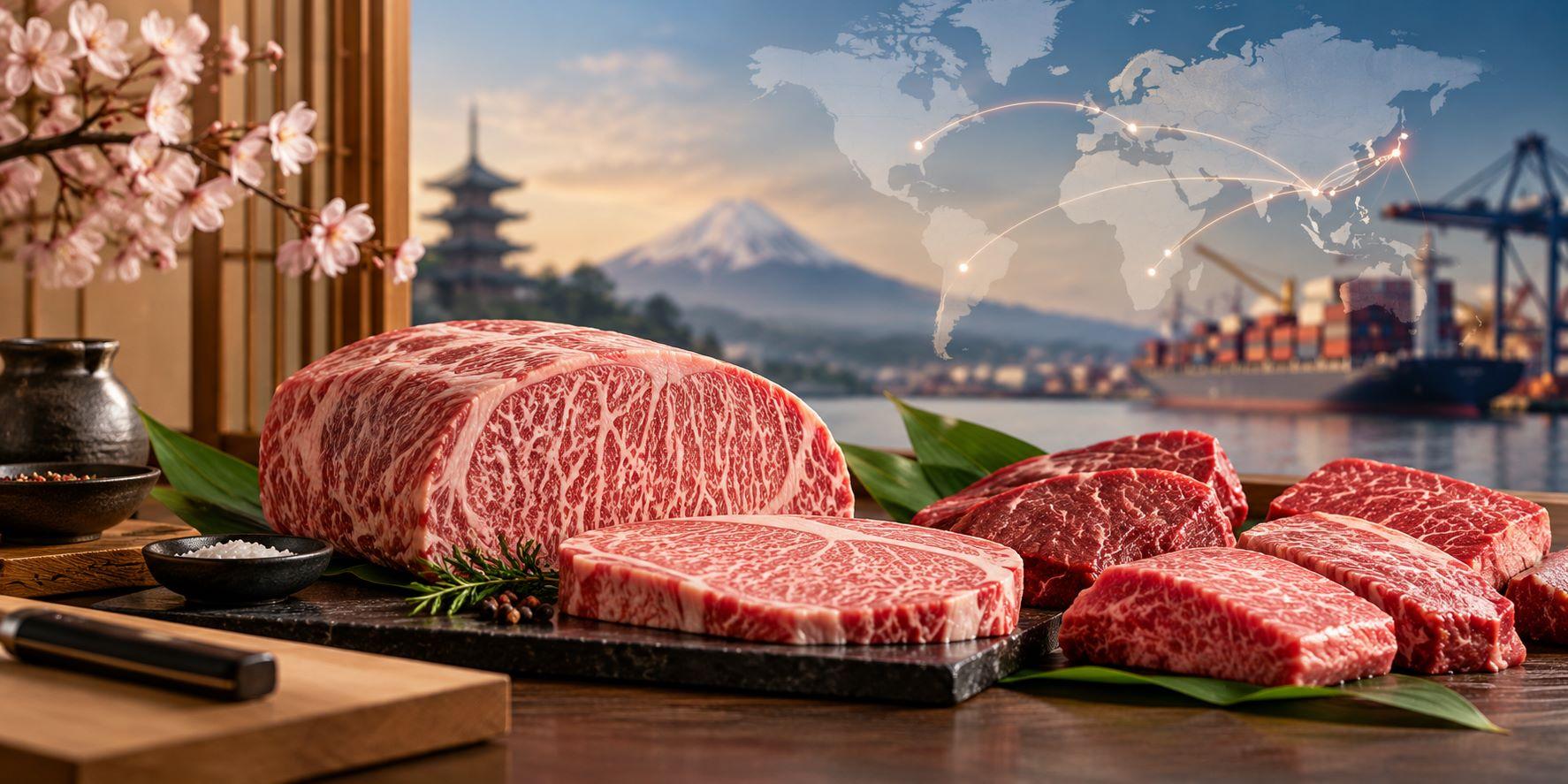
Japanese Wagyu has built its international reputation on richly marbled steaks served in high-end restaurants. This premium positioning has helped drive record export growth. However, it also presents a challenge: only a limited share of each carcass comprises sought-after cuts such as ribeye, sirloin, and tenderloin. To expand beyond this established niche, Japan needs to find more customers and uses for the rest of the animal.
In 2025, Japan’s beef exports reached JPY 73.1 billion, up 12.8% YoY. Sustaining this momentum will depend not only on selling more premium steaks, but also on introducing other Wagyu cuts to a broader range of international customers. By adapting these cuts to local culinary preferences and developing new applications, Japanese exporters could unlock a wider market for Wagyu.
A growing export opportunity
Japan’s beef exports are benefiting from international interest in Japanese cuisine and premium food products. According to the Ministry of Agriculture, Forestry and Fisheries (MAFF), exports reached JPY 73.1 billion in 2025. Export volumes also increased, reaching ~12,000 tons across more than 50 countries and regions, according to the Agriculture & Livestock Industries Corporation (ALIC).
Japan aims to increase beef exports to JPY 113.2 billion by 2030, compared with JPY 73.1 billion in 2025. Achieving this target will require broader market access and better utilization of different cuts. MAFF has identified market diversification, greater use of chuck and round, and improvements in export-certified processing facilities as priorities.
For international buyers, this creates opportunities to develop Japanese beef portfolios suited to different customers, applications, and price points.
Moving beyond premium cuts
Wagyu’s premium reputation has helped Japanese beef gain traction in high-end restaurants. However, concentrating on loin and other familiar steak cuts can limit how widely the product is used. Restaurants must balance Wagyu’s appeal with menu prices and profitability.
Japan’s export mix suggests room for growth. Loin remains the largest individual cut category, but chuck, shoulder, round, and brisket collectively account for a substantial share of exports. Demand therefore extends beyond premium steaks, although applications vary across markets.
Japan External Trade Organization’s (JETRO) US-facing Wagyu business guidebook explains the characteristics and culinary applications of different cuts, helping food-service businesses explore alternatives. With suitable preparation and menu positioning, these cuts can support a wider variety of dishes and price points. For importers and distributors, this creates an opportunity to develop broader Wagyu portfolios rather than focus predominantly on the highest-value cuts. Restaurants can also introduce Japanese beef to more customers without making every dish a premium steak experience.
Malaysia: making more cuts work
Malaysia illustrates how targeted market development can help unlock this opportunity.
Japanese beef exports to Malaysia exceeded JPY 2.4 billion in 2025, according to JETRO. However, premium pricing and familiarity with a limited range of cuts remain barriers to wider consumption.
In September 2026, JETRO Kuala Lumpur organized an initiative to increase awareness and use of secondary Wagyu cuts among restaurant and food-service professionals. The program demonstrated cutting techniques and explored alternative culinary applications.
A follow-up report by Malaysia’s national news agency, BERNAMA, highlighted challenges including rising costs, supply reliability and the need to balance quality with menu pricing. Cuts such as top blade, chuck tender, and shoulder clod were showcased for use in dishes beyond conventional steak offerings.
Supply-chain partnerships are also important. Sugimoto-Honten, producer of Kurohana Wagyu, reported that its factory received halal certification in December 2025 and subsequently began exporting halal Wagyu to Malaysia. In a market where halal compliance is important for reaching a broader customer base, this helps address a key market-entry requirement.
The broader lesson is that introducing a premium product is only the starting point. Understanding local food preferences, demonstrating practical applications, and establishing reliable, compliant supply arrangements are equally important for building demand.
Which overseas markets offer further opportunities?
Japan’s beef exports remain concentrated in a relatively small group of destinations. Taiwan, the United States, and Hong Kong are the leading markets, together accounting for more than half of export volume in 2025. They remain priorities for exporters seeking to deepen distribution and broaden product offerings.
Additional markets could diversify sales and reach customers with different preferences and purchasing power. However, exporters must assess local competition, willingness to pay, food-service channels, and the availability of suitable import partners.
Market access can open the door. In September 2025, Japan announced that beef exports to Kuwait had been permitted, subject to agreed conditions and applicable facility requirements. However, regulatory approval alone does not guarantee commercial demand. Established premium restaurant markets may suit high-value cuts, while others may require broader product ranges, more accessible prices, and greater buyer education.
From export potential to commercial execution
International expansion requires coordination across sourcing, compliance, positioning, and distribution. Exporters must meet destination-specific requirements while developing dependable relationships with importers, food-service distributors, and retailers.
Cold-chain capabilities are equally important. Chilled and frozen beef require different storage and transportation arrangements, while packaging, traceability, labelling, and temperature management must suit each product and channel. Inconsistent supply or handling can undermine buyer confidence.
Companies must also match offerings to target customers. Distributors serving premium restaurants may need different cuts and volumes from those supplying hotels or food-service chains. Introducing secondary cuts may require chef training, menu trials, and buyer education before repeat demand develops. Market intelligence can help businesses assess destination attractiveness, benchmark competitors, understand pricing and customer preferences, evaluate regulatory requirements, and select suitable routes to market.
Can Japan broaden its international beef business?
Japan’s export growth demonstrates the expanding international reach of Japanese beef. Its 2030 target reflects continued ambition, while initiatives such as JETRO’s Malaysia program show how the industry is addressing barriers to wider adoption.
Future growth will depend not only on selling more Wagyu, but also on broadening its culinary applications, improving utilization of different cuts, and developing reliable distribution in additional markets.
For companies looking to enter or expand in the Japanese beef trade, the opportunity lies in identifying the right markets, customers, and product strategies to turn international demand into sustainable commercial growth.
Aranca’s key takeaways
Japan’s 2030 beef export target will require growth beyond premium loin cuts. With Wagyu production growing modestly, exporters will need to generate more value from each carcass. Secondary cuts already account for ~57% of Japan’s beef export volume, creating opportunities to expand demand further. Malaysia shows how halal-certified supply and chef education can introduce alternative cuts at more accessible price points. New market access in Kuwait and the potential resumption of exports to China could open further opportunities, although certification requirements and competition from non-Japanese Wagyu will affect commercial viability. Choosing the right markets, understanding price points for different cuts, and building strong distribution partnerships will be the key to sustained export growth.
