
The EU Just Made Sustainable Packaging Everyone's Problem. Most Companies Aren't Ready
Published on 24 Aug, 2026
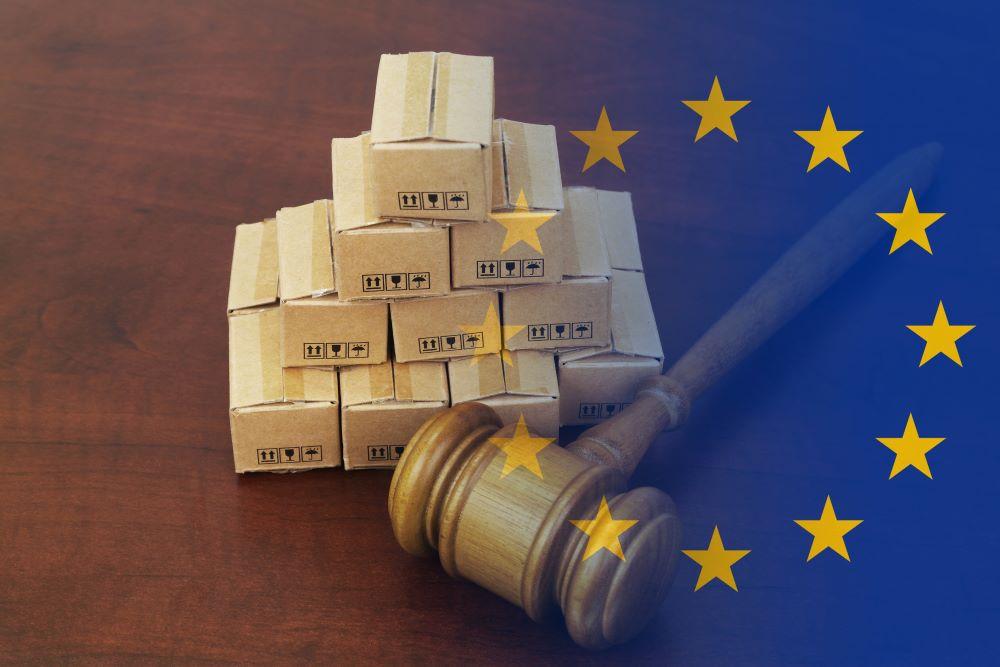
Packaging has always been the sustainability issue that companies managed at the edges a recycled logo here, a "less plastic" claim there, a few percentage points of recycled content to satisfy procurement questionnaires. The EU's new Packaging and Packaging Waste Regulation changes that calculus entirely. It entered into force in August 2026 and applies to every company placing packaged goods on the EU market regardless of where they are headquartered, regardless of sector, and regardless of whether they have a sustainability team that has heard of it yet.
This is not a niche compliance development. It is a product design, supply chain, and business model intervention and the companies that treat it as the former will find themselves rebuilding under deadline pressure what their more prepared competitors designed from the outset.
What the EU’s New Packaging and Packaging Waste Regulation Actually Requires
The PPWR operates on several simultaneous tracks, each with its own timeline and its own operational implications.
Recycled content targets mandate minimum percentages of post-consumer recycled material in plastic packaging starting at 30% for contact-sensitive applications like food packaging, rising to 50–65% for non-contact plastic packaging by 2030, with further increases to 2040. These are not aspirational figures. They are mandatory, verifiable, and tied to extended producer responsibility contributions that create direct financial consequences for non-compliance.
Packaging minimisation requires that packaging be reduced to the minimum necessary to protect the product eliminating unnecessary layers, void fill, and overpackaging. The regulation empowers regulators to set maximum ratios of empty space to product volume across product categories, with enforcement mechanisms to back them.
Reuse and refill targets are sector-specific and phased requiring, for example, that a defined percentage of beverages, takeaway food, and transport packaging be offered in reusable formats by 2030. For companies in food service, hospitality, and beverage, these targets require operational and logistics changes that cannot be implemented in a single reporting cycle.
Design for recyclability mandates that all packaging placed on the EU market must be recyclable by 2030 with a graded system assessing whether packaging can actually be recycled at scale in existing infrastructure, not just in theory.
Extended producer responsibility requires producers to cover the full net cost of collection, sorting, and recycling of their packaging, with EPR fees modulated based on packaging recyclability creating a direct financial incentive for better design that goes beyond compliance into cost management.
Why This is a Design and Supply Chain Problem
The most important thing to understand about the PPWR is that compliance cannot be achieved at the point of sale. It has to be designed in at the point of product development often years before a product reaches the shelf.
A company that wants to meet the 2030 recycled content target for plastic packaging needs, right now, to be specifying the recycled content of its packaging materials in its supplier contracts, building quality verification processes for post-consumer recycled polymers, and testing whether its existing production lines can process recycled feedstocks without affecting product quality or food safety. None of this happens in a quarter. The supply chain for high-quality, food-grade post-consumer recycled plastic is not deep enough in most markets to absorb a sudden surge in demand which means early movers will access better supply at better prices, and late movers will face premium costs and potential non-compliance.
The recyclability requirement creates a parallel design challenge. Packaging that is technically recyclable in a laboratory setting is not the same as packaging that is recyclable at scale in existing European collection and sorting infrastructure. The PPWR's assessment framework specifically tests against real-world recyclability which means mixed-material packaging, certain laminates, black plastics, and numerous other common formats that are technically recyclable but practically not so will need to be redesigned. For companies with large, established product portfolios, the scope of that redesign effort is substantial.
Who Gets Caught Off Guard
The PPWR has been developing for several years, and large consumer goods companies with dedicated regulatory affairs and packaging sustainability functions have been tracking it. The companies that will be caught off guard are not in that group.
The exposure is concentrated among three categories. First, mid-sized consumer brands with EU market access but without the regulatory infrastructure of a multinational companies that know the regulation exists but have not yet translated it into product development priorities or supplier conversations. Second, non-EU manufacturers particularly in Asia, the US, and the Middle East who export packaged goods into EU markets and are subject to the regulation's requirements without having been inside the EU regulatory conversation that produced it. Third, companies in B2B categories industrial packaging, transport packaging, logistics who have assumed the regulation is primarily a consumer goods issue. It is not. Transport and industrial packaging is explicitly in scope.
The Extended Producer Responsibility Mechanism is the Financial Signal
For companies accustomed to treating packaging sustainability as a cost of doing business absorbing EPR fees as an operating line item without fundamentally changing packaging design the PPWR's modulated fee structure changes the economics. EPR fees under the new regulation are explicitly calibrated to recyclability performance: packaging that is not recyclable at scale will attract substantially higher fees than packaging that is. The fee differential is designed to make redesigning packaging cheaper than continuing to pay for poor design.
This is the mechanism that turns the PPWR from a compliance question into a financial strategy question. Companies that redesign packaging to meet recyclability standards reduce their EPR cost base. Companies that don't pay more per unit placed on the market, every year, until they do. Over a product portfolio of any meaningful scale, that differential compounds quickly.
The Window is Narrower Than it Looks
The regulation is in force. Transition timelines vary by obligation some requirements apply from 2028, others from 2030, with further milestones to 2035 and 2040. That may sound like breathing room. It isn't, for the same reason it never is with regulations that require upstream supply chain and product design changes: the lead times for those changes are long, and the later a company starts, the less choice it has about how it implements.
The companies that will manage the PPWR most effectively are those treating today while the first compliance deadlines are still two years away as the moment to map their full packaging portfolio against the regulation's requirements, identify the highest-exposure formats, engage their packaging suppliers on recycled content and recyclability, and build the internal governance to track compliance across their product range. The regulation does not wait for readiness. It rewards preparation and penalises delay.
How Aranca Can Help
Aranca's Sustainable Growth Advisory and Net Zero & Decarbonisation solution help companies map their packaging portfolio against PPWR requirements, assess supply chain exposure to recycled content and recyclability obligations, and build the circular economy strategy needed to turn regulatory compliance into competitive advantage identifying where early action reduces EPR cost exposure and where redesign creates genuine brand and operational value.