
What CRED's US$900 Million Funding Reveals About Fintech Valuations in 2026
Published on 20 Jul, 2026

Large private financing rounds reveal how sophisticated investors price risk, growth, and future cash flows. CRED's latest fundraise offers a useful case study of how fintech valuation frameworks have evolved following the 2022–2024 market correction. CRED, the Bengaluru-based fintech platform founded by Kunal Shah, has secured US$900 million in Series H funding led by Meta, at a post-money valuation of US$4.5 billion. Unlike the exuberance of 2021, where growth alone often justified premium valuations, today's investors are placing greater emphasis on sustainable business models, customer franchise quality, and monetization potential and long-term platform economics. CRED's latest funding round illustrates this evolution.
CRED's Valuation Recovery Reflects the Evolution of Fintech Valuations
The round values CRED at US$4.5 billion, a meaningful recovery from its 2025 valuation of approximately US$3.5 billion, though still below its US$6.4 billion peak during the 2022 funding cycle. Rather than a markdown from historical highs, this reflects a broader recalibration in venture markets, where investors are rewarding operating leverage and monetization over customer acquisition at any cost.
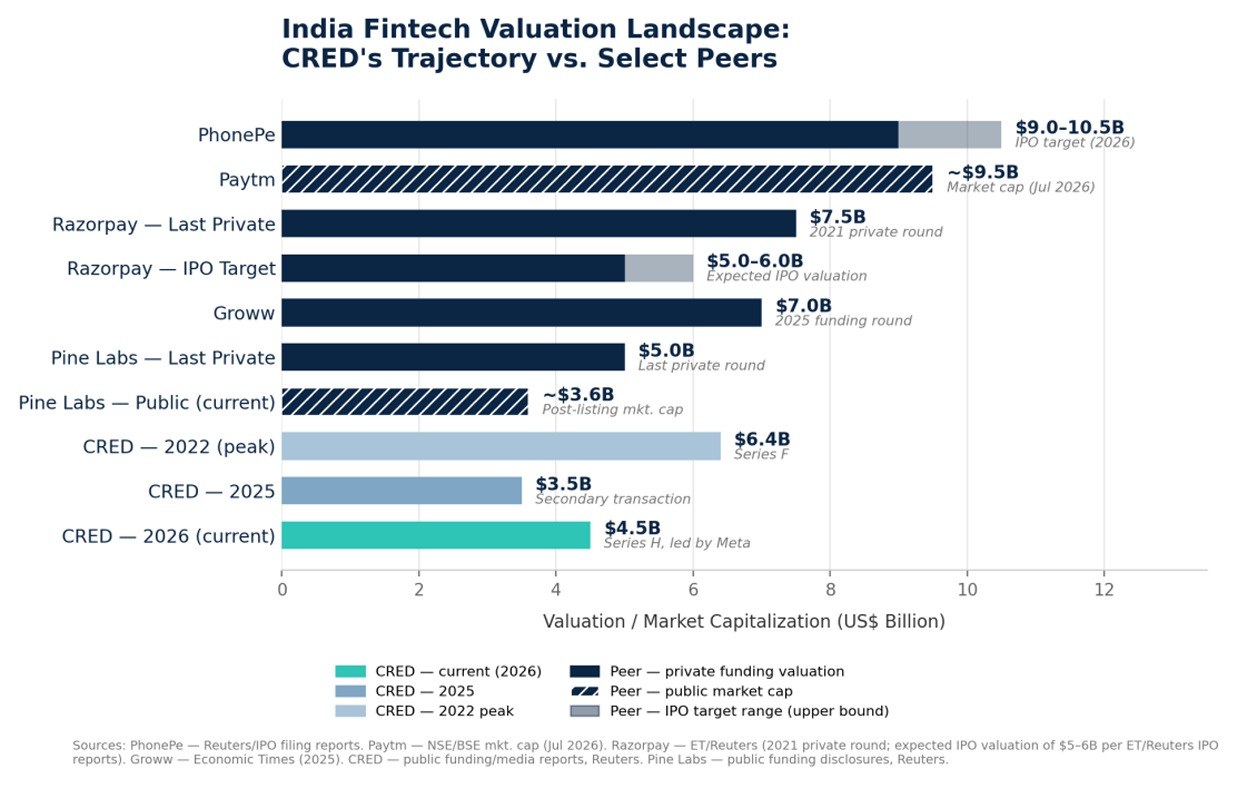
Figure 1: CRED's valuation trajectory (2022-2026) against select Indian fintech peers.
CRED appears to have made significant progress on both fronts. The platform now serves approximately 17 million monthly members, processes more than 40% of India's credit card bill payments, and manages lending assets exceeding US$2.5 billion through partner financial institutions.
Unlike SaaS businesses, where recurring revenue is often the primary driver of valuation, fintech companies require a more nuanced approach that varies with the underlying business model. Payment platforms are commonly assessed using metrics such as Gross Payment Value (GPV) and take rates, while lending businesses are evaluated based on Assets Under Management (AUM), loan book growth, portfolio quality, and credit performance. Marketplace and financial platform businesses, on the other hand, are increasingly valued on customer-centric metrics such as customer quality, lifetime value, engagement, cross-sell potential, and unit economics. As a result, investors typically triangulate value using a combination of discounted cash flow analysis, relevant operating metrics, and market multiples, rather than relying on a single valuation metric or traditional revenue multiples.
How Valuation Experts Assess Fintech Companies After Market Correction
We view this transaction as a strategic re-rating rather than merely another financing round, reflecting: (i) investors' willingness to commit US$900 million in a disciplined funding environment, (ii) CRED's evolution from a credit card payments platform into a broader financial ecosystem, and (iii) growing confidence in its ability to monetize a curated, high-credit-quality customer base.
Three observations stand out. First, investors are increasingly distinguishing between scale and quality: while several fintechs report impressive user numbers, few match CRED's concentration of high-credit-quality customers, who typically deliver superior lifetime value and stronger monetization potential.
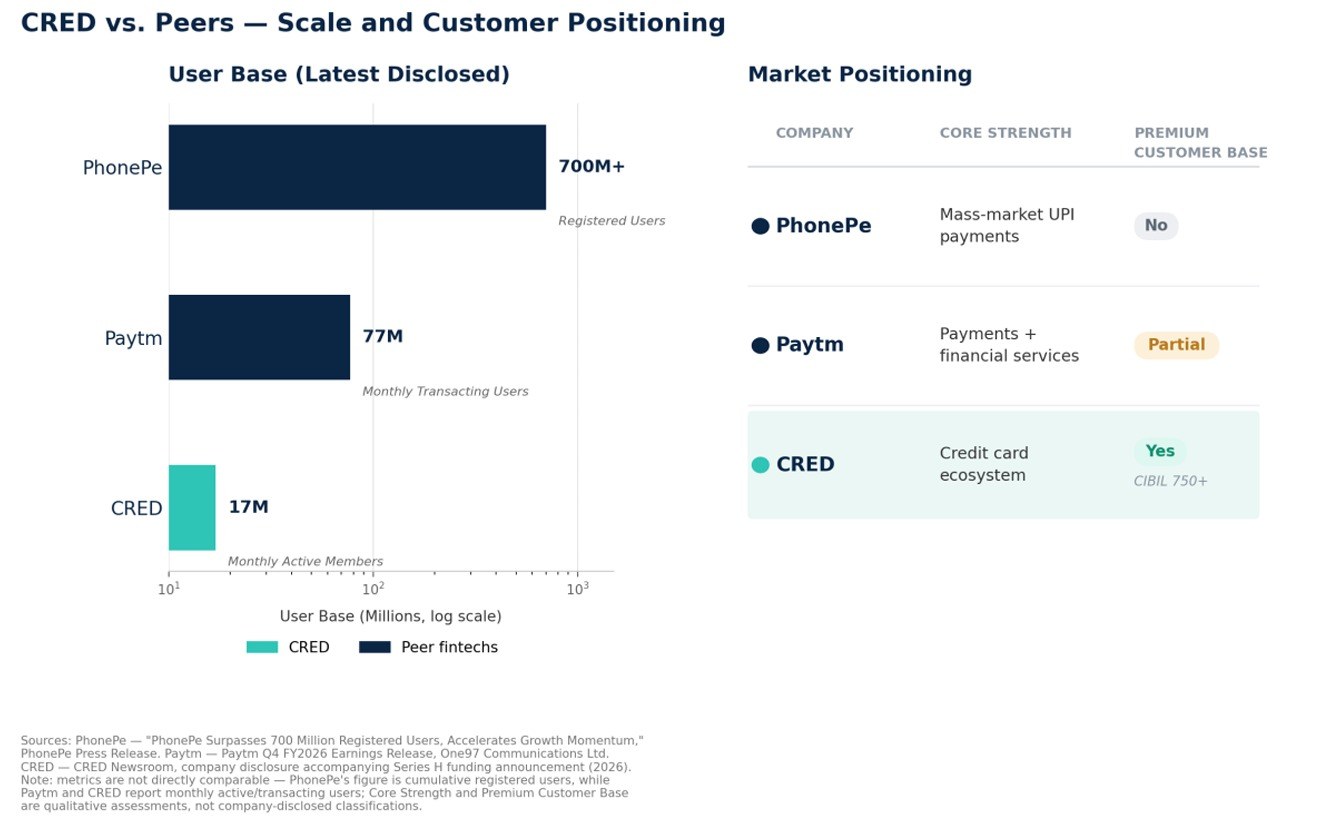
Figure 2: CRED's user base and market positioning vs. select fintech peers
Second, the implied valuation appears to price future ecosystem economics rather than existing profitability, as fintech platforms evolve into integrated marketplaces spanning payments, lending, insurance, wealth, and commerce, making traditional revenue multiples less meaningful. Investors instead assess the ability to monetize an expanding customer relationship over time.
Third, the transaction underscores the continued importance of strategic capital: unlike purely financial investors, strategic and corporate investors assign value to distribution synergies, technology integration, and long-term ecosystem positioning, often justifying premiums over conventional financial benchmarks.
What CRED's Funding Means for India's Fintech Valuation Landscape
The transaction reflects a broader shift in venture investing. Over the past two years, investors have become increasingly selective, prioritizing sustainable growth, disciplined capital allocation, and clear monetization strategies over rapid customer acquisition. CRED's funding suggests that while the era of "growth at all costs" may be over, businesses with differentiated customer franchises and scalable platform economics can still attract significant capital at premium valuations.
For founders, the message is clear: scale alone is no longer enough. Long-term value will increasingly depend on improving unit economics, diversified revenue streams, and the ability to convert customer engagement into sustainable monetization.
For investors, the deal reinforces the need to look beyond conventional revenue metrics. Businesses with strong customer franchises, scalable business models, and multiple monetization levers are better positioned to create long-term value.
CRED's US$900 million funding is significant not because of its size, but because it reflects how fintech valuations are evolving. Investors are increasingly rewarding businesses that combine differentiated customer franchises with scalable monetization and disciplined execution.
For valuation professionals, the transaction underscores that premium valuations must be anchored in robust customer economics, realistic growth assumptions, and market evidence, not market narratives alone.
"In today's private markets, valuation is no longer a reward for growth alone, it is a measure of how credibly a company can convert customer trust into long-term value."