
Looking Past the Headlines: Early Signs of Stress in Credit Cards in India
Published on 30 Dec, 2025

India’s new credit card issuance has expanded at a robust ~20% CAGR over the past five years, but the pace of growth has brought rising concerns around asset quality and consumer leverage. After a decade of hyper-growth, the industry is entering a correction phase, with stress becoming visible. NPAs surged sharply in FY22 and FY24, indicating faster than expected deterioration in newer loan books. Stress remains uneven, with public sector banks facing materially higher GNPAs due to weaker underwriting, while private banks continue to demonstrate superior risk controls. In response, the RBI has tightened regulations on unsecured lending, and while defaults may edge up in FY26 and FY27, asset quality is expected to stabilize thereafter on the back of stricter underwriting and regulatory reforms.
India’s new credit card issuance reported a significant 20% CAGR over the past five years, with usage surging across urban and rural areas. However, this rapid expansion has also brought rising concerns about consumer debt, defaults, and financial stress. The ecosystem is currently navigating a pivotal “correction phase” after a decade of hyper-growth, during which active cards surged 5x from FY15 to FY25. While topline metrics (spends and issuances) remain robust, the underlying asset quality is showing emerging stress pockets.
In FY25, the total active credit cards doubled to 111 million from 55 million in FY20, and new card issuance peaked at ~17 million in FY24 before declining to 12 million in FY25, following the RBI's risk-weight regulations.
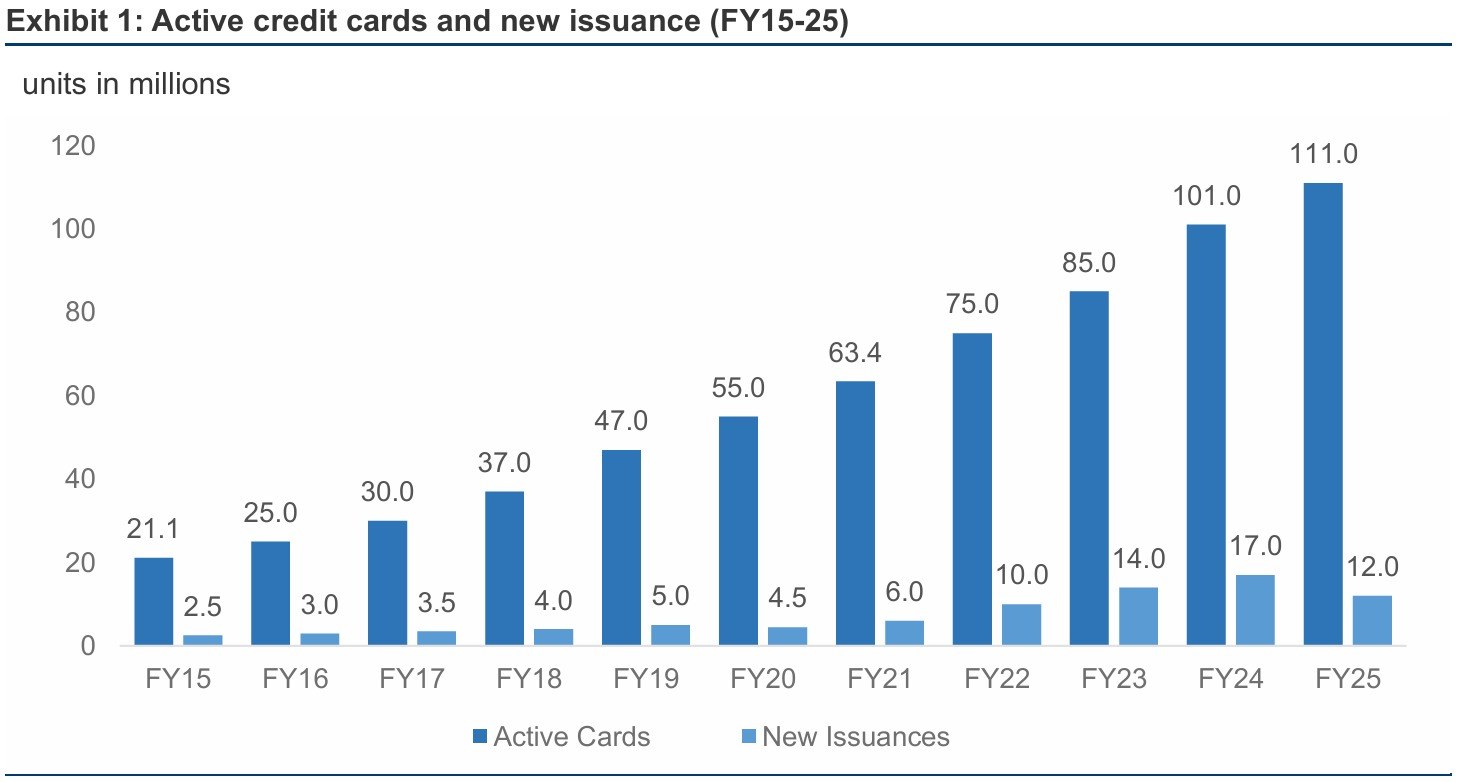
Source: RBI, TransUnion CIBIL and CRIF
As per the sell-side reports, monthly total spending reached a record ₹2.17 trillion in September 2025, and the average spend per card stood at ₹16,911 in early FY25. E-commerce has emerged as the dominant channel, accounting for over 66% of total credit card spends in September 2025. Credit-card outstanding balances per card have risen sharply, increasing from about ₹1,600 in FY15 to nearly ₹25,700 in FY25, indicating significantly higher card usage and suggesting that consumers are now utilizing 30–40% of typical credit limits of ₹50,000–₹2,00,000.
Structural Expansion vs. Asset Quality (The Divergence)
The past decade has created a massive credit funnel, but the quality of that funnel is now under scrutiny.
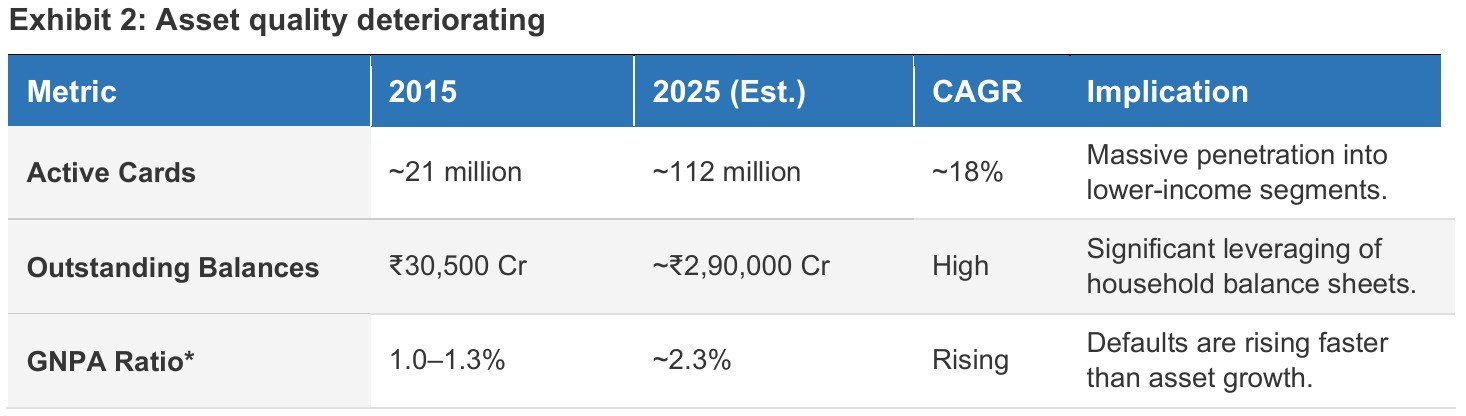
*GNPA means gross non-performing assets
The divergence is starkest in the post-pandemic recovery. While the RBI moratoriums artificially suppressed NPAs over FY20-21, the true stress is surfacing now. The 73% jump in NPAs in FY22 and another 28% in FY24 indicate that vintage cohorts (loans originated 2–3 years ago) are exhibiting faster-than-expected credit stress.
The “Hidden” Stress: Beyond the Headline Numbers
Active credit cards surged from ~21 million in FY15 to over 111 million in FY25, while outstanding balances have ballooned from ₹30,500 crore to ₹2.88 lakh crore during the same period. However, this expansion has coincided with rising NPAs in the segment, reflecting increasing leverage, especially among young borrowers.
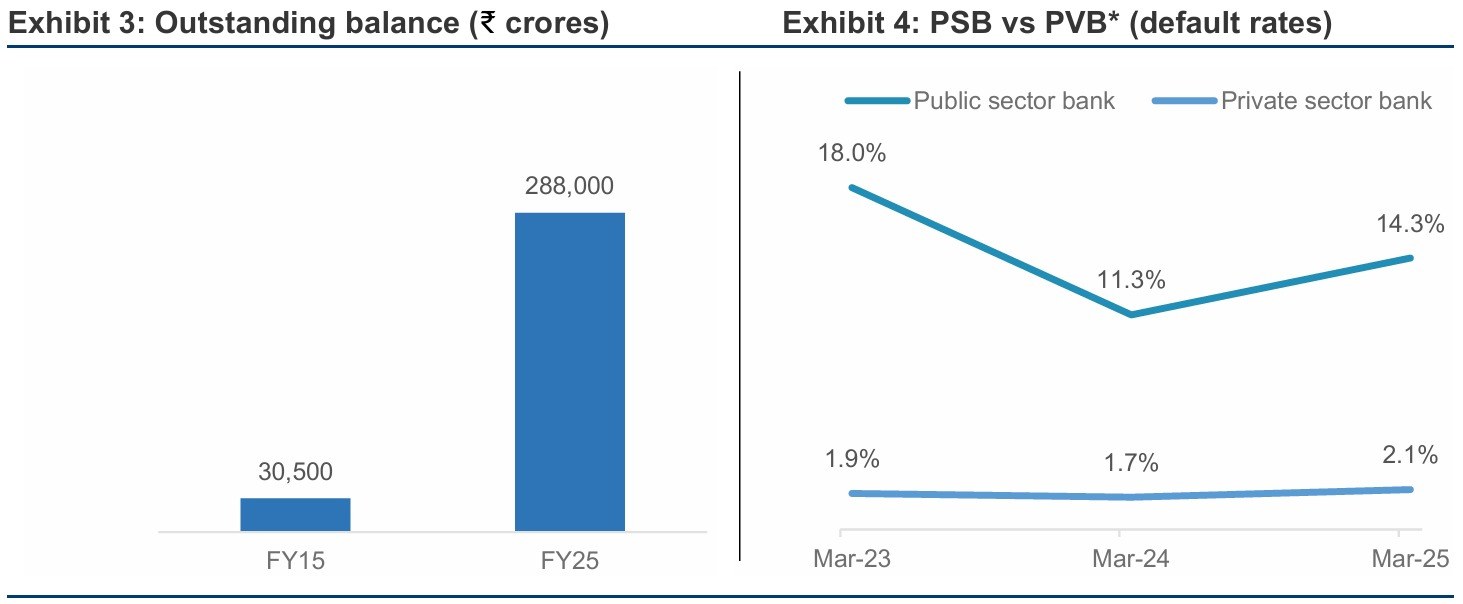
Source: RBI, TransUnion CIBIL and CRIF, *PSB – Public sector banks and PVB – Private sector banks
Based on an RBI report, the stress is not uniform. PSBs suffer disproportionately higher stress.
- PSB Credit Card GNPA: 12–18%, indicating poor underwriting in aggressive cross-selling. It has declined over the past two years but is significantly higher compared to private banks.
- Private Bank GNPA: 1.9–2.1%, which reflects better risk controls than PSBs.
Defaults rose steadily over the past decade, tracked mainly through the GNPA ratio, which measures dues overdue beyond 90 days. Between FY15 and FY19, default rates stayed low at 1.0–1.3%, supported by stable economic growth and modest credit card penetration of 25–50 million cards.
In FY19, the GNPA ratio reached 1.3%, with about ₹1,000 crore in NPAs on outstanding dues of ₹88,000 crore. The pandemic in FY20 created repayment stress, but the RBI moratoriums helped keep GNPA at 1.3%, with NPAs at ₹1,108 crore on ₹1 lakh crore outstanding. As the economy reopened, deferred stress surfaced by FY21, with GNPA rising to 1.5% and NPAs reaching ₹1,800 crore on ₹1.2 lakh crore outstanding.
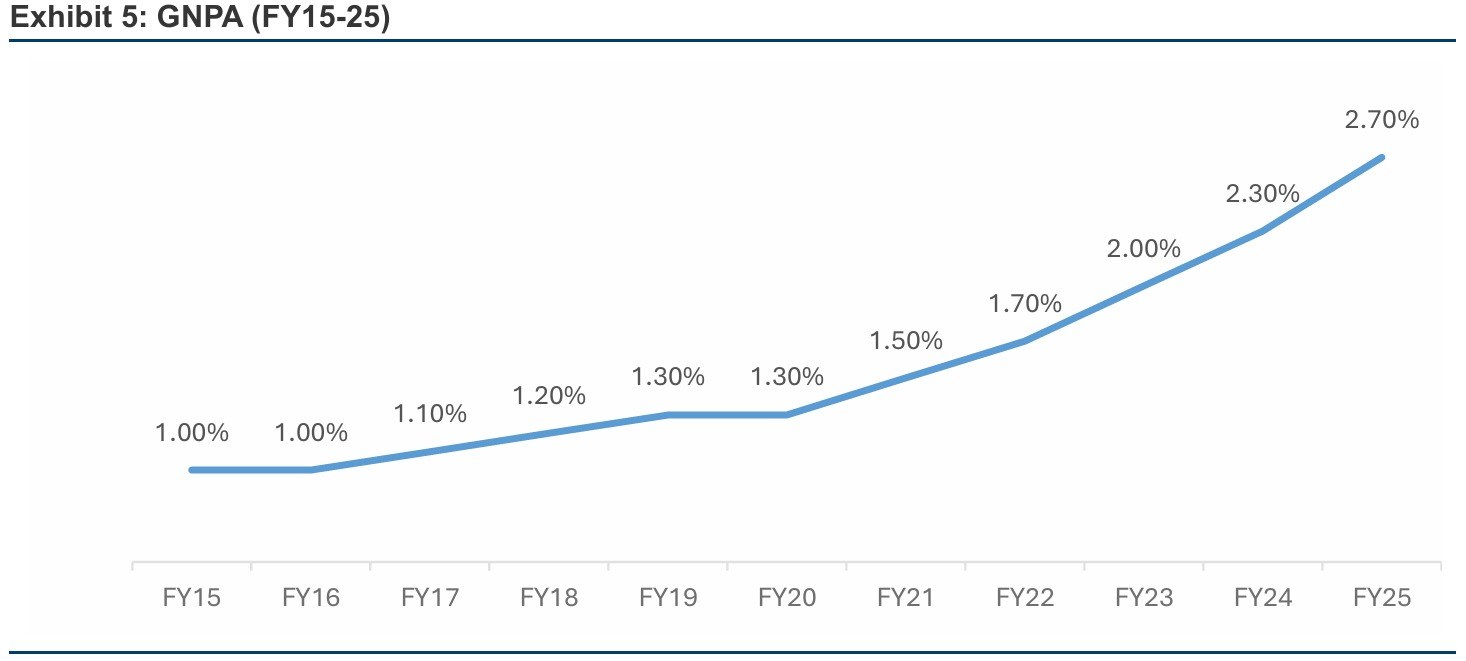
Source: RBI, TransUnion CIBIL and CRIF
In FY24, a higher number of active cards and weaker underwriting pushed GNPA to around 2.3%, with NPAs rising 28% YoY to ₹6,742 crore on ₹2.92 lakh crore outstanding. This rise in defaults is particularly pronounced among younger borrowers, those with limited credit history, and in Tier-III towns, where aggressive lending has led to over-borrowing.
Entering 2025, the GNPA ratio remained near 2.3%, though CRIF Highmark data implies deeper distress, showing a 15% default rate and a 44% YoY surge (vs FY24) in the 91–360-day overdue bucket to ₹33,886 crore. The GNPA ratio climbed from 1.84% in FY24 to 2.3% in FY25, with some reports indicating that overall loan defaults (including small-ticket loans) reached 3.6% in FY25.
Regulatory Intervention and Its Impact
The RBI, foreseeing risks in unsecured lending, intervened decisively in November 2023 by raising risk weights to 150% on unsecured consumer credit (including credit cards), which slowed new card issuance.
The impact (2024-25):
- Capital Consumption: Banks now must set aside more capital for every rupee lent on a card, depressing return on equity (RoE) for this segment.
- Issuance Freeze: New card issuance growth plummeted from peaks of >20% YoY in August 2024 to just 4% YoY by August 2025.
- Portfolio Scrubbing: Lenders such as SBI Card and RBL Bank have actively slowed growth to clean up their books, leading to a moderation in outstanding growth (projected at 10-12% for FY26 vs >20% in FY23 and FY24).
Despite the overall improvement in banking GNPAs to 2.3–2.58%, credit card NPAs have increased around fivefold since 2020, reflecting household financial stress. While GDP growth of 8.0% reflects solid economic growth, the RBI’s Financial Stability Report (FSR) indicates unsecured loan GNPA to remain elevated or rise over FY26-27, highlighting the need for stronger underwriting, better borrower awareness, and AI-driven risk controls.
Aranca’s View
Drawing from the RBI's June 2025 FSR and recent sell-side analysts’ projections, defaults are projected to rise marginally in H1 FY26 (April–September 2025) due to lingering pressures from high interest rates, inflation, and over-leveraging among young borrowers. However, stabilization is anticipated in H2 FY26 and into FY27, supported by tighter underwriting, the impending Expected Credit Loss (ECL) framework from April 2027, and the potential RBI rate cuts.
Risk mitigating measures:
- Collection Efficiencies: Banks are investing heavily in AI-driven early warning systems, but recovery rates in unsecured lending remain low.
- Systemic Risk: With credit card NPAs increasing around fivefold since FY20 (in absolute terms), any shock to urban employment could trigger a non-linear spike in defaults.
Conclusion
While the systemic threat to the Indian banking sector is capped due to strong capitalization, the credit card segment is entering a period of elevated risks. Investors should expect higher provisioning costs and compressed margins for pure-play card issuers and banks with a high unsecured exposure in the coming quarters.

Siddhi Deo

Dharmik Patel
