
U.S.–Venezuela Oil Dynamics: Control of Channels Over Ownership of Reserves
Published on 27 Jan, 2026
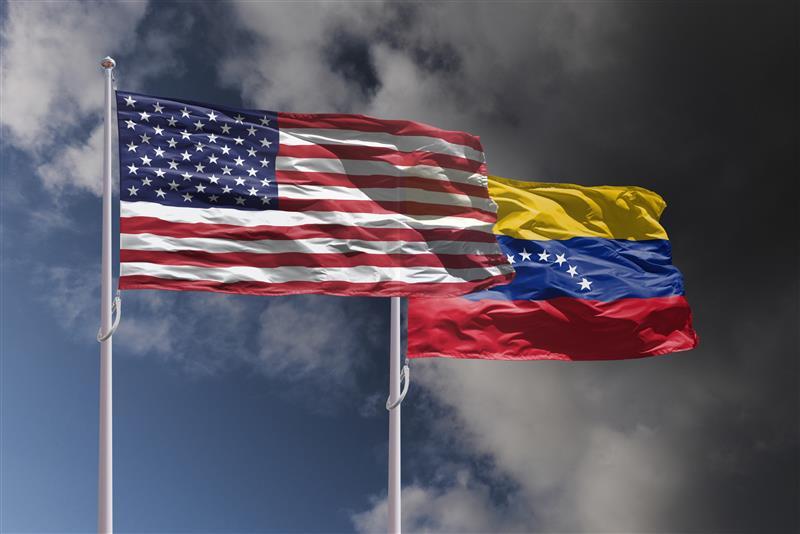
U.S. influence over Venezuela’s oil would matter more in how barrels are allocated rather than in how much oil reaches the market. Despite vast reserves, production constraints mean the real shift would be strategically shaping trade routes, investment access, and payment systems. The primary impact would appear first in refinery margins, crude differentials, and regional trade flows, not in a significant change in global oil supply or prices. In effect, power would come from control over channels, and not ownership of resources
When discussing Venezuela’s oil sector, attention is usually on the size of its reserves. But in today’s energy market, the major issue is not how much oil a country holds, but who decides how that oil is traded, financed, and delivered. The growing U.S. influence over Venezuela matters less for global supply and more for how energy flows are organized.
This shift became clearer after the U.S. military operation in early January 2026 led to the capture of President Nicolás Maduro and senior members of his administration. While officially presented as part of Washington’s campaign against narcotics trafficking, President Trump linked the action to a broader effort to reassert U.S. influence in the Western Hemisphere. His public comments connected Venezuela’s oil industry directly to U.S. strategic interests and framed American involvement as necessary to rebuild what he described as a broken system.
The importance of this framing goes beyond politics. It signals a change in how Venezuelan oil is viewed globally not just as a commercial asset, but as a strategic lever in regional and international affairs.
Control matters more than ownership
In the modern energy system, power comes less from owning reserves and more from controlling the rules around trade, finance, and legitimacy. Sanctions policy, licensing decisions, and access to financial networks often matter more than geology.
Venezuela illustrates this clearly. The country holds ~303 billion barrels of proven reserves. However, it produces less than 1 million barrels per day, compared with more than 3 million barrels per day in the late 1990s. This gap shows that the real value of Venezuelan oil today lies not in how much exists underground, but in who decides where it is sold, who can invest, and how revenues move.
Recent developments suggest that the U.S. is working to shape these decisions more directly. Reports of Venezuelan crude being redirected toward U.S. markets under special arrangements point to the growing influence over trade routes and payment channels. If this trend continues, Washington’s role would extend beyond that of a major producer to that of a key organizer of heavy crude flows in the Western Hemisphere.
Market impact: signals before volumes
Expectations of a rapid recovery in Venezuelan output remain limited. Decades of underinvestment have left deep gaps in infrastructure and operations. Industry estimates suggest that lifting production even to 2 million barrels per day would require USD 40–60 billion in sustained investment, along with major upgrades to pipelines, facilities, and export terminals. Under these conditions, stronger U.S. influence would not lead to a wave of new supply, but to greater control over how a restricted volume of oil is allocated.
In oil markets, political shifts often affect prices before they affect supply. Past announcements of Venezuelan shipments to the U.S. have already triggered short-term moves of ~1–2% in Brent and West Texas Intermediate (WTI) prices. These reactions show how sensitive markets are to changes in perceived control, even when physical flows remain the same.
What this means for investors and energy companies
The effects of growing U.S. influence over Venezuelan oil would not be the same for everyone in the energy sector. For investors, US refineries that can process heavy crude, especially along the Gulf Coast, will attain the biggest near-term gains. These plants run at exceptionally large scales, and even a small improvement of USD 3–5 per barrel in crude input costs can add significantly to annual profits. For heavy-oil producers outside Venezuela, particularly in Canada, the picture is more challenging. Greater competition in the heavy-crude market could keep prices under pressure and reduce producers’ bargaining power with refiners. At the same time, investment in Venezuela remains difficult because of political and regulatory uncertainty. The sharp fall in the country’s oil output by ~70% since 2000 shows how strongly governance issues can affect long-term returns, regardless of how large the resource base may be.
For energy companies, stronger US influence would also change the way business is done. Activity linked to Venezuelan oil would depend more on compliance with US sanctions and access to financial systems, making regulatory alignment just as important as technical capability. Service companies, shipping firms, and insurers already treat Venezuelan operations as high risk, which is reflected in high costs and strict terms. Venezuelan crude often trades at USD 10–20 per barrel below similar grades, mainly because of political and logistical uncertainty. This pricing gap shows how closely politics and oil economics are now linked.
Uneven regional effects
The impact of growing U.S. influence over Venezuelan oil would vary widely by region. In the U.S., the benefits would be industrial as Gulf Coast refiners gain access to crude better suited to their processing systems, potentially lowering marginal fuel costs. In Canada, where energy exports to the U.S. exceeded 3.5 million barrels per day in 2023, renewed competition from Venezuelan heavy crude could weaken producers’ pricing leverage. Venezuelan oil competes directly with Canadian heavy crude, which accounts for ~4 million barrels per day of Canada’s production. If Venezuelan barrels return to the U.S. Gulf Coast in meaningful volumes, the traditional discount on Canadian heavy crude, often USD 15–20 per barrel below WTI, could narrow. The result would be a shift in margins and negotiating power across North American producers and refiners, rather than any major change in the global oil supply. Over time, visible effects would emerge in crude price differentials rather than in overall supply levels.
China, which accounts for more than 50% of Venezuela’s total oil exports, has been a major buyer of discounted Venezuelan oil. A redirection of this supply toward the U.S. would reduce China’s access to low-cost barrels and increase replacement costs. Across Latin America and the Caribbean, the effects would be felt through changes in trade patterns, as refiners may need to replace Venezuelan volumes with costlier alternatives.
Over time, these trends would point toward a more U.S.-centered energy trade structure in the Western Hemisphere, shaped increasingly by political alignment rather than market efficiency alone.
Aranca’s Takeaway
Even with stronger U.S. influence over Venezuela’s oil sector, the global supply picture would change little. Venezuela’s reserves are large, but production limits remain severe. The more important shift would be strategic, not quantitative. By shaping where Venezuelan oil is sold, who can invest, and how payments are processed, the U.S. would gain greater influence over how a limited supply of heavy crude is used. The effects would show up first in refinery margins, trade patterns, and energy diplomacy not in a lasting change in global oil prices.
