
How the US – Iran Conflict is Reshaping Private Equity Investment Priorities
Published on 09 Jun, 2026
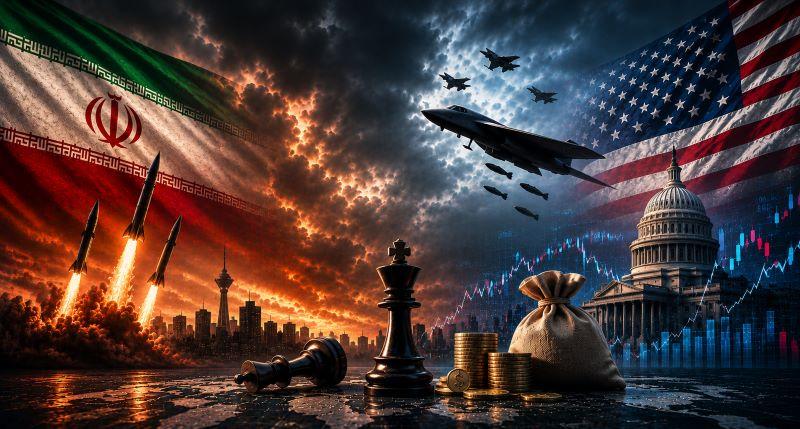
The US–Iran conflict is reshaping global private equity markets by increasing volatility across energy, trade, and financing systems while accelerating investor focus toward resilience-oriented sectors. As geopolitical uncertainty persists, PE firms are becoming more selective around leverage, deployment pace, and portfolio construction, with rising capital allocation toward energy security, infrastructure, logistics, cybersecurity, and defense-related assets.
The prolonged US–Iran conflict added pressure to a global private equity (PE) market that was navigating slower exits, weaker fundraising activity, elevated borrowing costs, and tighter financing conditions. Through most of 2025 and early 2026, higher global interest rates increased the cost of debt-funded acquisitions, reduced leverage availability, and weakened dealmaking across private markets. At the same time, slower IPO activity and lower distributions from existing investments limited the capital returning to limited partners, further constraining fundraising momentum.
According to the Wall Street Journal, global PE firms were holding around 33,000 unsold portfolio companies worth more than USD 3 trillion, as challenging financing and valuation conditions delayed exits. Global PE fundraising fell to its slowest pace in nearly a decade during Q1 2026, declining from USD 115.5 billion in Q1 2025 to just USD 86 billion in Q1 2026, a drop of approximately 26% year-over-year.
The escalation of tensions around the Strait of Hormuz, a route responsible for around 20% of global oil flows, added another layer of volatility across energy, shipping, credit, and infrastructure markets. Reuters reported that Brent crude prices rose as high as USD 126 per barrel in April 2026, increasing more than 50% since the conflict began. Rising energy prices, shipping disruption, and geopolitical uncertainty significantly altered investment risk assessments across private markets. The conflict accelerated a broader shift underway across the PE industry. Investors increasingly switched capital to energy security, infrastructure, logistics, private credit, and businesses with predictable cash flows and pricing power while becoming more selective on leverage, acquisitions, and exit timing.
Key Implications for PE Firms
1. Energy Security Back to the Center of PE Investing
The return of energy security as a major global investment theme was one of the clearest outcomes of the conflict. High oil and gas prices improved earnings visibility across traditional energy businesses and revived deal activity after several slow quarters. According to Bloomberg, strong commodity prices encouraged US PE firms to put more than USD 20 billion worth of oil and gas companies up for sale, while Reuters reported that global oil and gas M&A activity reached nearly USD 38 billion during Q1 2026, the strongest quarter in two years.
For several years, most institutional investors had reduced exposure to traditional hydrocarbons amid commodity volatility and the growing focus on energy transition investing. However, the US–Iran conflict shifted investor priorities back to supply security, infrastructure resilience, and diversification of global energy routes.
Importantly, PE firms increasingly favored contracted and infrastructure-backed energy assets with visible cash flows rather than purely commodity-exposed upstream businesses. Capital deployment accelerated across LNG facilities, pipelines, storage infrastructure, shipping terminals, and energy transport networks, as governments and corporations sought alternatives to vulnerable Middle Eastern supply routes.
Franklin Templeton noted that geopolitical instability accelerated investor demand for diversified energy infrastructure and non-Middle East supply chains. This shift became evident in projects, such as Kimmeridge’s Commonwealth LNG project in Louisiana, backed by investors, including BlackRock, Ares Management, and Mubadala Investment Company. The conflict also reinforced a broader move away from speculative growth investing and toward sectors linked to infrastructure, energy resilience, and long-duration cash flow visibility.
2. Supply Chain Disruption Turned Logistics and Infrastructure into Strategic Assets
The conflict significantly disrupted global shipping and trade routes, creating new opportunities in logistics and transport infrastructure. Many shipping companies rerouted vessels away from the Strait of Hormuz during periods of escalation, leading to an increase in fuel usage, transport time, and freight costs. Shipping insurance premiums for vessels operating near the Gulf rose sharply as security risks increased. Longer shipping routes created delays across supply chains and increased operating costs for companies dependent on imported raw materials and cross-border manufacturing networks.
As transportation costs surged, PE firms increasingly viewed logistics infrastructure as a stable long-term investment theme rather than as a mere cyclical transportation business. Reuters reported that Brookfield Asset Management agreed to acquire World Freight Company from EQT and PAI Partners for approximately USD 1.2 billion during the conflict period. The deal reflected growing investor interest in freight, warehousing, ports, cargo businesses, and transport infrastructure.
Infrastructure and logistics assets became more attractive as they generated relatively stable revenues despite uncertain market conditions. Moreover, many of these businesses directly benefited from rising freight demand and higher transportation pricing.
Large infrastructure investments accelerated during the conflict period. BlackRock’s Global Infrastructure Partners, along with Temasek, ADNOC, and L’Imad, launched a USD 30 billion infrastructure partnership focused on energy and transport projects across the GCC region.
3. Financing Pressure and Market Volatility Slowed Dealmaking and Exits
As geopolitical uncertainty intensified, PE firms became increasingly cautious around acquisitions, financing structures, and exit activity. Elevated interest rates and tighter lending conditions led to leveraged buyouts becoming more expensive, while volatile commodity prices and supply chain disruption complicated earnings forecasts and valuation assumptions.
Financing markets became more selective. Reduced leverage availability, higher debt servicing costs, and widening credit spreads constrained large-scale acquisitions, particularly for cyclical businesses with uncertain cash flow visibility. Simultaneously, buyers increased scrutiny around supply chain concentration, sanctions exposure, refinancing risk, and energy-cost sensitivity.
Exit conditions weakened further, as volatile equity markets delayed IPOs and widened valuation gaps between buyers and sellers. According to the Wall Street Journal, global PE firms continued holding nearly USD 3 trillion worth of unsold companies while awaiting more stable financing and market conditions.
In response, PE firms increasingly relied on alternative liquidity strategies, including continuation funds, GP-led secondary transactions, structured liquidity solutions, and partial exits to return capital to investors while preserving portfolio flexibility.
The conflict also increased the importance of private credit markets. As traditional bank lending remained constrained, private credit funds continued expanding their role in acquisition financing, refinancing, and sponsor-backed lending. Investors increasingly favored defensive lending strategies focused on covenant protection, cash flow visibility, and resilient sectors, such as infrastructure, logistics, and essential services.
4. Defense, Cybersecurity, and Critical Infrastructure Drew Greater Institutional Interest
The conflict accelerated investor interest in sectors linked to national security, operational resilience, and digital infrastructure protection. Businesses involved in cybersecurity, industrial protection systems, defense technology, energy-grid security, and critical infrastructure management became increasingly attractive investment targets. Governments and global corporations increased spending on digital resilience, cyber defense, and infrastructure protection, as geopolitical tensions heightened concerns around cyberattacks, operational disruption, and supply chain vulnerabilities.
From an investment perspective, these sectors attracted capital due to their recurring revenue models, multi-year government contracts, and relatively stable long-term demand profiles. This trend was also reflected in institutional investment activity. With backing from Advent International and Blackstone, Shield AI, a defense technology company, raised USD 2 billion in March 2026, highlighting growing capital allocation toward autonomous defense systems, cybersecurity, and resilience-focused infrastructure amid escalating geopolitical tensions. Similarly, Anduril Industries raised USD 5 billion in May 2026, doubling its valuation to USD 61 billion, as institutional capital continued shifting toward AI-enabled defense systems and military infrastructure during ongoing conflicts in the Middle East.
5. Gulf Sovereign Wealth Funds Became Critical Sources of PE Liquidity
The US–Iran conflict increased the importance of Gulf sovereign wealth funds (SWFs) as key sources of liquidity and long-term capital for global private equity markets. As fundraising conditions weakened and many institutional investors turned more cautious, PE firms increasingly relied on Gulf investors for anchor commitments, co-investment capital, infrastructure financing, and large-scale strategic partnerships.
According to Reuters, SWFs across Saudi Arabia, the UAE, Qatar, and Kuwait collectively manage nearly USD 5 trillion in assets, giving them considerable financial flexibility during periods of geopolitical and economic volatility. Institutions, including Public Investment Fund, Mubadala Investment Company, Qatar Investment Authority, and ADQ, continued deploying capital across infrastructure, logistics, AI, energy, advanced manufacturing, and strategic technologies despite broader fundraising pressures.
The conflict further strengthened the Gulf’s influence across global private markets, enhancing its role as not only an energy supplier but also a major provider of strategic capital, co-investment funding, and cross-border investment support during periods of market uncertainty.
Outlook
The US–Iran conflict is expected to keep PE firms cautious around large leveraged acquisitions and aggressive deployment strategies, as volatility across energy, shipping, and financing markets continues to pressure valuations, refinancing conditions, and exit activity. As geopolitical uncertainty becomes a more persistent feature across global markets, PE firms are increasingly incorporating supply chain exposure, liquidity resilience, refinancing risk, and dependence on global trade routes into investment underwriting and portfolio management decisions.
The conflict is reinforcing a shift toward lower-leverage deal structures, greater use of private credit, and more flexible liquidity strategies, as financing markets remain uncertain and exit timelines extend. Financing discipline, operational value creation, and resilient portfolio construction are expected to remain key investment priorities during prolonged periods of market volatility.
Additionally, sustained disruption across energy and trade markets is expected to drive further PE investment and consolidation across oil and gas, energy infrastructure, logistics, industrial services, and strategic supply chain assets. At the same time, private capital is expected to continue shifting toward sectors linked to energy security, cybersecurity, defense technology, critical infrastructure, and domestic manufacturing, as governments and corporations increase spending on economic resilience and infrastructure protection.
The conflict is expected to further accelerate the broader shift across private markets away from aggressive growth-oriented investing toward strategies centered on resilience, infrastructure, strategic relevance, and long-term cash flow visibility.
