
South Korea’s BESS Shift: From EV Battery Extension to Grid-Scale Power Backbone
Published on 02 Jul, 2026
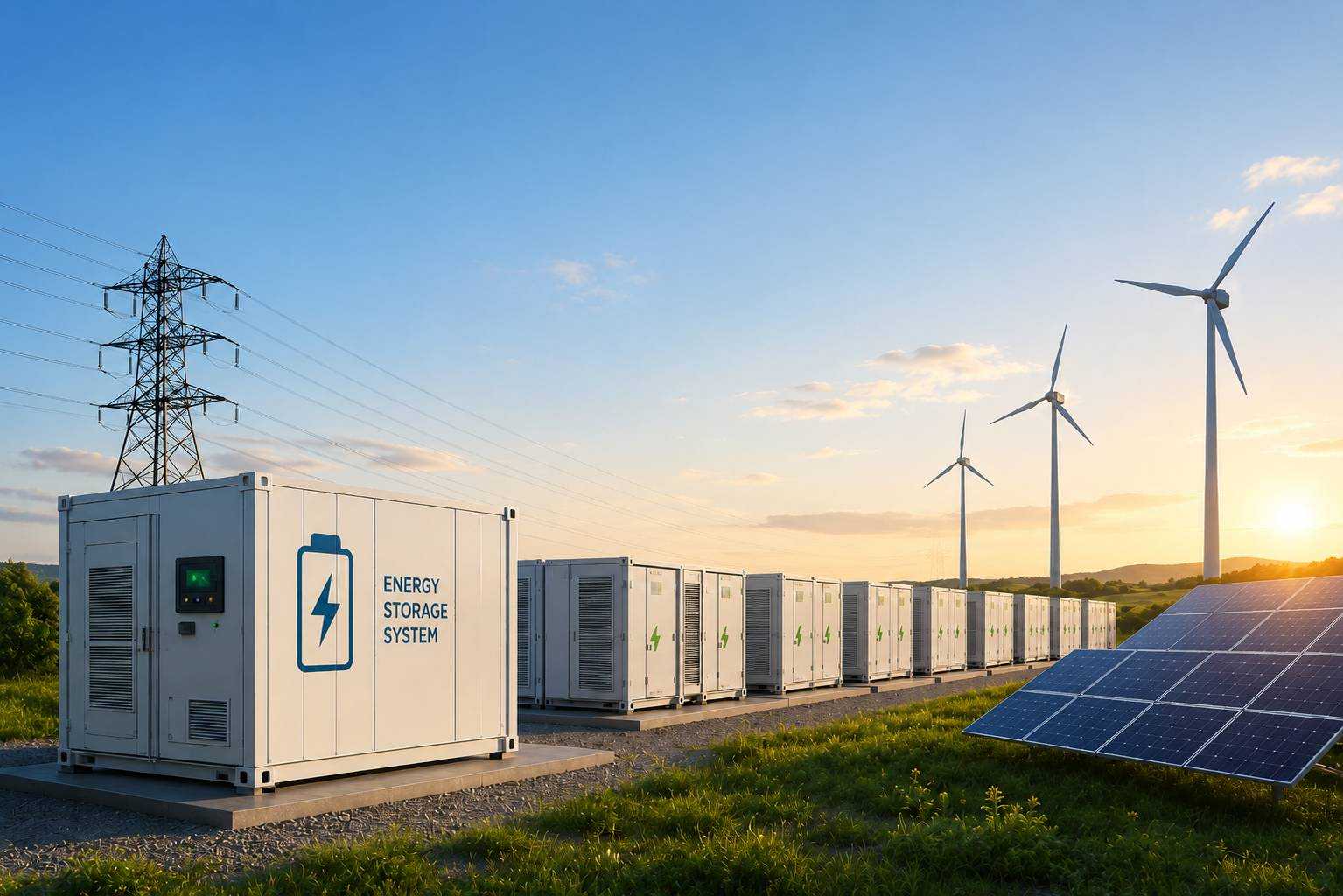
South Korea’s battery energy storage system (BESS) industry is moving through a structural reset. What began as a natural extension of the country’s electric vehicle (EV) battery strength is now becoming a core pillar of grid modernization, renewable integration, and energy security.
Introduction
South Korea has established itself as one of the world’s leading battery manufacturing hubs, supported by industry leaders such as LG Energy Solution, Samsung SDI, and SK On. The country’s dominance in lithium-ion battery technology was initially driven by consumer electronics and later strengthened by rapid growth in EV battery demand.
This industrial strength naturally created opportunities in stationary energy storage. Early BESS deployment in South Korea benefited from advancements in cell chemistry, battery safety architecture, and large-scale manufacturing efficiencies developed for EV applications.
However, the market is now evolving beyond its EV-linked origins. Energy storage is increasingly being recognized not as a complementary battery application, but as an essential component of modern power infrastructure.
BESS Transition
South Korea’s electricity system is facing mounting structural pressures. The country remains heavily dependent on imported energy resources, making energy security a persistent concern. Simultaneously, electricity demand continues to rise, driven by energy-intensive sectors such as semiconductors, advanced manufacturing, and hyperscale data centers.
Renewable energy deployment is accelerating as well. South Korea aims to raise renewable power generation to 21.9% of total electricity generation by 2030, up from roughly 9% today. This rapid shift is introducing greater intermittency into the power system.
This is where BESS becomes critical.
Battery storage enables excess renewable generation to be stored during low-demand periods and dispatched during peak consumption windows. It improves frequency regulation, mitigates grid congestion, supports reserve capacity, and strengthens backup power reliability. Unlike thermal generation assets, batteries respond in milliseconds, making them highly effective for balancing increasingly dynamic power systems.
Key Market Enablers
Several factors are supporting the expansion of South Korea’s BESS market.
A major advantage lies in the country’s well-developed battery supply chain. South Korea already possesses deep capabilities across cell production, power electronics, battery packaging, and system integration, reducing barriers to scaling energy storage solutions.
Government support has also played an important role. Policy measures aimed at renewable integration, grid reliability, and energy efficiency have improved the commercial attractiveness of storage projects. Incentive structures and electricity pricing mechanisms have further strengthened project economics.
Demand is also broadening across multiple customer segments. Beyond utility companies and renewable developers, commercial and industrial users are increasingly adopting BESS to manage electricity costs and improve energy resilience.
Safety Reset
South Korea’s BESS industry experienced a critical turning point following a series of battery fire incidents between 2017 and 2019. These incidents raised serious concerns around thermal management, installation quality, and system-level operational controls.
Rather than slowing the market permanently, these challenges triggered an industry-wide reset. Regulators, manufacturers, and system integrators responded by tightening safety protocols, improving thermal monitoring, strengthening fire suppression systems, and enhancing battery management technologies. As a result, the market shifted from aggressive deployment toward a more disciplined focus on safety, reliability, and long-term operational performance.
Today, safety has become a major competitive differentiator within the BESS ecosystem.
Key Market Enablers
The next phase of growth will be driven by broader and more sophisticated use cases:
- Grid-scale storage for renewable integration
- Frequency regulation and ancillary services
- Commercial and industrial peak shaving
- Data center backup and power reliability
- Battery recycling and second-life applications
- AI-enabled energy management systems
This is also changing where value is created. Earlier, the market was centered on battery cells. Today, value is increasingly moving toward integrated solutions, including power conversion systems, energy management software, predictive analytics, EPC services, operations and maintenance, and lifecycle management.
Conclusion
South Korea’s BESS sector is entering a new phase of strategic importance. What began as an extension of the country’s battery manufacturing expertise is now becoming central to its energy transition strategy.
Future industry leadership will depend on more than battery production capacity alone. Companies that can combine safety, software intelligence, system integration, and operational reliability will be best positioned to capture long-term value.
For South Korea, the rise of BESS represents far more than just a market opportunity—it represents a critical step toward building a more flexible, resilient, and low-carbon energy future.
