
South Korea’s AI Data Centers Drive New Demand for Power Grid and Energy Storage Infrastructure
Published on 03 Jul, 2026
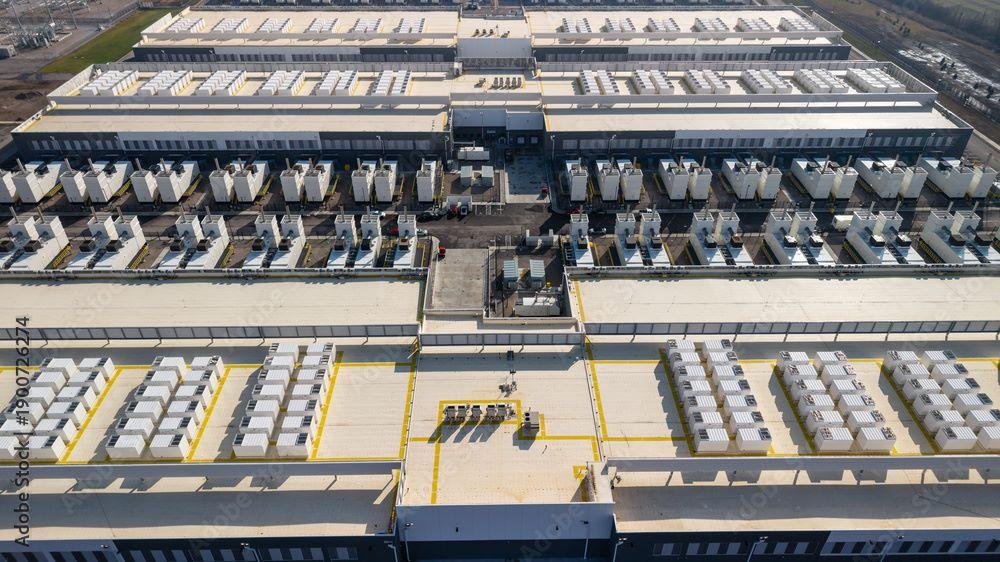
South Korea's expanding data center sector is shifting focus from tech development to the physical power grid, with energy demand projected to triple by 2030. This rapid growth is straining metropolitan infrastructure and driving massive investment into regional grid modernization. Consequently, the buildout is creating a major revenue wave for domestic electrical equipment manufacturers and opening a vital new energy-storage market for battery makers.
While South Korea's artificial intelligence (AI) sector is typically associated with semiconductors and advanced computing, the next phase of its growth depends heavily on the country’s electrical grid. The rapid expansion of AI data centers is driving unprecedented demand for power generation, transmission, and storage, creating direct opportunities for manufacturers of transformers, switchgear, substations, and batteries.
In June 2026, a consortium led by SK Group, GS Group, and Naver announced a KRW 550 trillion (~USD 398billion) investment to build 8.4 GW of AI data center capacity. Total AI-related infrastructure investments are projected to top KRW 1,000 trillion (~USD 724 billion) by 2035, shifting the AI conversation from software and chips to physical utility infrastructure.
Data Center Expansion and Electricity Demand
South Korea's data center market is expanding rapidly. Market data indicates the country's data center IT load capacity will rise from 1.96 GW in 2025 to 6.32 GW by 2030, a compound annual growth rate (CAGR) of over 26%.
AI facilities require significantly more power than traditional cloud data centers due to the density of graphical processing units (GPUs) and specialized computing hardware. Consequently, securing reliable power supply has become the primary bottleneck for new developments.
Grid Constraints and Regional Shifts
Most of South Korea's existing data centers are concentrated near Seoul, which has created severe regional grid strain. The main challenges include:
- Severe power density demands from large-scale AI campuses.
- Transmission bottlenecks in metropolitan areas.
- Long delays for new grid connections and substation upgrades.
To ease this pressure, the government is incentivizing operators to build facilities outside the capital region while funding grid modernization. Government forecasts suggest South Korea’s peak electricity demand will rise 37% by 2040, driven by AI data centers, broader electrification, and industrial growth.
AI Expansion: A Major Demand Driver for Electrical Equipment
Building and connecting an AI data center requires extensive electrical infrastructure, including:
- High-voltage transformers
- Gas-insulated switchgear (GIS)
- Substations and distribution systems
- Grid automation and monitoring software
Domestic equipment manufacturers like HD Hyundai Electric, Hyosung Heavy Industries, and LS Electric are seeing sharp revenue growth due to these requirements. To capture this market, these manufacturers are shifting from selling standalone components to delivering complete smart-grid and automated energy solutions.
Battery Energy Storage: Emerging Strategic AI Enabler
Battery energy storage systems (BESS) are becoming central to AI infrastructure deployment.
Historically viewed as backup power assets, BESS are now evolving into an active grid-balancing and energy management solution for data center operators.
Large-scale storage systems are deployed to:
- Ensure uninterrupted uptime during grid disturbances
- Reduce peak demand charges through load shifting
- Provide temporary power during grid interconnection delays Improve renewable energy integration for low-carbon operations
For hyperscale operators, energy storage is increasingly becoming a strategic necessity rather than an optional resilience layer.
AI Data Centers: A New Growth Avenue for Battery Manufacturers
The rapid rise of stationary storage presents a timely diversification opportunity for South Korea’s battery ecosystem.
As global electric vehicle demand experiences near-term volatility, grid-scale storage offers battery manufacturers a large, stable, and long-term demand channel.
Industry leaders such as LG Energy Solution, Samsung SDI, and SK On are particularly well-positioned to capture this opportunity.
AI data center applications demand premium battery solutions characterized by:
- High cycle life
- Advanced thermal management
- Rapid response capability
- High reliability and safety standards
These performance requirements align closely with South Korea’s technological strengths in advanced battery manufacturing.
The Bigger Picture: AI Growth Is Now an Energy Infrastructure Challenge
South Korea’s AI buildout extends far beyond the digital economy. Each gigawatt of increased AI data center capacity requires parallel investments in transformers, substations, transmission networks, and battery storage systems. With data center power demand expected to more than triple by 2030, electrical infrastructure is becoming one of the most critical determinants of AI scalability. The country’s power equipment and energy storage industries are therefore emerging as strategic beneficiaries of the AI supercycle.
AI has evolved beyond a mere computing challenge to encompass a power infrastructure challenge. For South Korea, winning the AI race will depend as much on strengthening its electrical grid as on advancing semiconductors and software.
