
Rewriting RNA: How a Known Mechanism is Becoming a New Drug Class
Published on 13 Oct, 2026
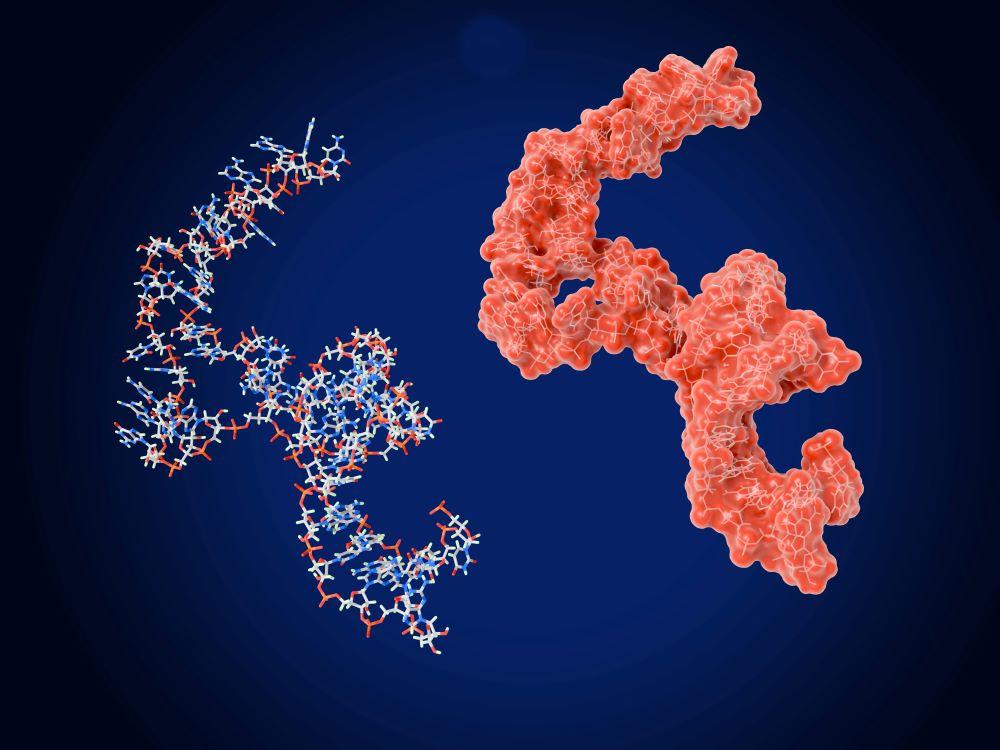
The discovery that cells naturally edit their own ribonucleic acid (RNA) has been long known. What is new is the recognition that this mechanism can be therapeutically used to correct single-letter errors in messenger RNA before they translate into disease-causing proteins. In October 2024, Wave Life Sciences demonstrated the first therapeutic RNA editing in a human patient. That milestone did not mark the beginning of the field. It marked the end of a prolonged phase of validation. The question now is not whether RNA editing works but how broadly it can be applied and how quickly can it scale.
Biology Came First
RNA editing is not an invention. It is a natural cellular process, conserved across species, which has long existed within human biology. The key enzyme, adenosine deaminase acting on RNA (ADAR), converts adenosine to inosine within double-stranded RNA. Since inosine is interpreted as guanosine by cellular machinery, this effectively rewrites the genetic instruction at that position in the messenger RNA.
The phenomenon was first observed nearly four decades ago. In 1995, researchers showed that synthetic antisense RNA strands could recruit ADAR to edit RNA inside cells. The paper received little attention at the time and remained overlooked.
The concept resurfaced in 2012, when independent research groups led by Thorsten Stafforst and Joshua Rosenthal demonstrated programmable systems to guide ADAR to specific RNA targets. The principle was straightforward: design a short RNA sequence complementary to the mutation, allow it to form a double-stranded structure, and let endogenous ADAR perform the edit. It did not involve any foreign proteins, viral vectors, or permanent genomic modification. This simplicity makes the approach therapeutically compelling.
What RNA Editing Actually Does and Why it Matters
RNA editing differs from earlier genetic technologies in one critical way: it operates at the RNA level rather than the deoxyribonucleic acid (DNA) level.
It does not introduce permanent genomic changes. This avoids the risks associated with irreversible DNA editing, including unintended mutations and long-term oncogenic potential. It also allows for controlled, repeatable dosing.
A single guide RNA is sufficient to recruit endogenous ADAR in contrast to DNA-editing approaches that rely on exogenous enzymes or bacterial proteins. This reduces the delivery complexity and immunogenicity risk.
The most immediate applications lie in diseases caused by G-to-A point mutations. These single-letter changes disrupt protein function but can, in principle, be corrected through A-to-I editing at the RNA level. Thousands of such mutations are known, many associated with serious conditions where the current therapies manage the symptoms rather than address the underlying defect.
The reversibility of RNA editing is occasionally framed as a limitation. In practice, it is often an advantage. If therapy leads to unintended effects, treatment can be stopped and the system resets. This provides a level of control that permanent DNA editing does not offer.
For regulators and clinicians navigating the risks of irreversible genomic intervention, this distinction is significant.
Positioning RNA Editing: A Category, not a Replacement
RNA editing is often considered the competitor of clustered regularly interspaced short palindromic repeats (CRISPR). This comparison is intuitive but incomplete. CRISPR-based DNA editing has demonstrated the ability to deliver functional cures, as seen with Casgevy in sickle cell disease. This approach is well suited to conditions where ex vivo gene editing of stem cells is feasible and permanent correction is desirable.
However, DNA editing is not universally applicable. In vivo delivery remains challenging. The use of bacterial-derived enzymes raises immunogenicity concerns. Moreover, the permanence of genomic edits introduces risk in conditions where reversibility or tunability may be preferable.
RNA editing occupies a distinct therapeutic space. It is particularly relevant for chronic diseases, neurological conditions, and scenarios where controlled, reversible intervention is advantageous.
RNA editing’s delivery model differentiates it. Since ADAR is present in cells, the therapeutic payload is limited to a guide RNA. In many cases, this can be delivered using chemically modified oligonucleotides, including GalNAc-conjugated systems that have been validated in antisense and siRNA therapies.
This is a non-trivial advantage. Delivery has historically been the primary bottleneck in genetic medicine. RNA editing builds on an existing, well-characterized delivery infrastructure rather than requiring entirely new modalities. The field is not in direct competition with CRISPR. It defines a complementary category.
Clinical Turning Point
For years, RNA editing lacked clinical validation. However, this changed in October 2024.
Wave Life Sciences’ WVE-006, designed to treat alpha-1 antitrypsin (A1AT) deficiency, demonstrated successful RNA editing in human patients in the RestorAATion-2 trial. A single subcutaneous dose produced clinically meaningful levels of wild-type protein, exceeding regulatory thresholds for therapeutic relevance.
The September 2025 update added nuance. The therapy restored protein production and appeared to preserve physiological regulation, with increased protein levels observed in response to an unrelated acute stress event. This suggests that RNA editing can restore protein quantity and functional biological responsiveness.
Investor reactions were more measured, reflecting expectations for increase in protein levels. However, the results remained clinically meaningful and aligned with regulatory benchmarks. The divergence between market expectations and clinical outcomes underscores the challenges of evaluating early-stage platforms rather than any fundamental limitation of technology.
Strategic Land Grab
The pharmaceutical industry has moved quickly to establish positions in RNA editing. GSK, Eli Lilly, Novo Nordisk, and Roche have entered partnerships with biotech startups Wave Life Sciences, ProQR Therapeutics, Korro Bio, and Spark Therapeutics, respectively, to accelerate the development of RNA editing therapies. These partnerships span multiple therapeutic areas and reflect a broad commitment to modality.
The structure of these deals highlights conviction and uncertainty. ProQR’s collaboration with Eli Lilly in 2022 includes potential milestone payments of up to USD 3.75 billion with an upfront payment of USD 75 million. Korro Bio’s partnership with Novo Nordisk, focused on cardiometabolic disease, includes up to USD 530 million in milestones.
The breadth of indications is a distinguishing factor. Initial programs focused on rare monogenic diseases, where clear targets and defined populations facilitate early clinical development. However, expansion into cardiometabolic and broader chronic conditions signals that RNA editing is positioned as a platform rather than as a niche therapy.
Indications Horizon and CNS Opportunity
The range of conditions potentially amenable to ADAR-based RNA editing is wide, but two areas stand out as particularly compelling. The first is liver disease. GalNAc-conjugated oligonucleotides enable efficient delivery to hepatocytes, making the liver the most accessible target organ. Programs targeting A1AT deficiency, cholestatic diseases, and patatin-like phospholipase domain-containing protein 3-related steatohepatitis reflect this advantage.
The second is the central nervous system. RNA editing offers a potential solution for neurological diseases where DNA editing approaches are limited. Neurons do not divide, reducing the effectiveness of DNA repair-dependent editing techniques. RNA editing does not rely on these pathways.
If the guide RNA can be delivered to the neuron, editing can occur. This creates opportunities in diseases such as amyotrophic lateral sclerosis, Huntington’s disease, and other neurodegenerative conditions.
Delivery remains a challenge, often requiring intrathecal administration rather than systemic delivery. However, the underlying biological rationale is strong, and multiple programs are advancing in this area.
Limitations Are Real
A field with such ample momentum deserves honest scrutiny of its constraints, not just its promises. First, ADAR-mediated editing is currently limited to A-to-I conversions. While this addresses a considerable proportion of disease-causing mutations, it does not cover the full spectrum. Alternative editing systems are being explored but remain less advanced.
Second, the need for repeat dosing introduces cost and compliance considerations. While reversibility offers safety advantages, it may be less suitable in conditions where permanent correction is achievable.
Third, off-target editing remains a concern. Although guide RNAs are highly specific, unintended edits are possible and require careful characterization. While these are not fundamental barriers, they define the current boundaries of technology.
Our Take: Infrastructure and Proof Are Building Simultaneously
What distinguishes RNA editing from many emerging platforms is the simultaneous development of clinical validation and commercial infrastructure. Large pharmaceutical partnerships are being formed alongside early clinical data. The ecosystem required to scale these therapies is being built in parallel with proof of concept.
The trajectory resembles that of RNA interference. The biological mechanism was understood early, but therapeutic realization depended on delivery innovation. The gap between discovery and approval was driven more by engineering than by biology.
RNA editing benefits from this precedent. It builds on the existing oligonucleotide delivery platforms while extending functionality from gene silencing to gene correction. This distinction is crucial. RNA interference suppresses gene expression, while RNA editing restores it. For certain diseases, this difference is clinically decisive. The next chapter will likely be written by the delivery chemists who extend the platform's reach beyond the liver. They include computational biologists who predict off-target edits before they reach patients, regulatory scientists who build the frameworks to evaluate a new class of reversible genetic medicine, and clinical teams that accumulate the evidence base across indication after indication until RNA editing is not a category of experimental therapy but a standard component of the genetic medicine toolkit. The mechanism has been known for 40 years. The drug class is just beginning.
