
The €5 Billion Question: Can Germany Decarbonise Industry?
Published on 02 Jun, 2026
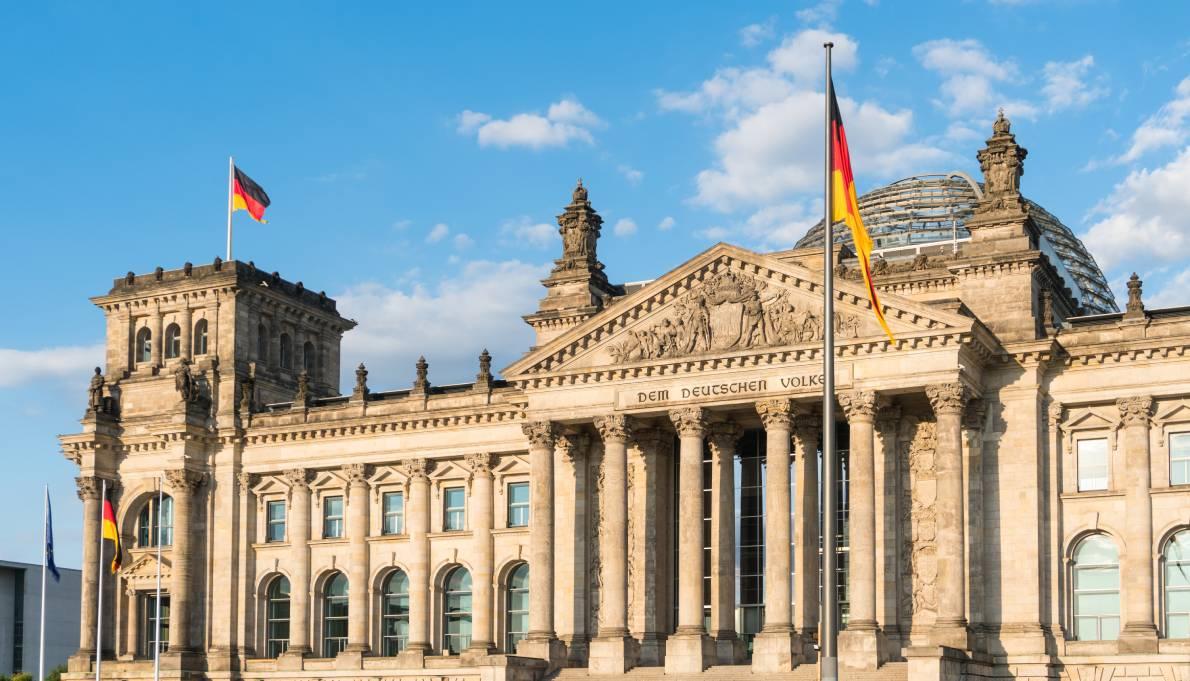
Germany is moving industrial decarbonisation from climate ambition into industrial policy. With the launch of the 2026 Carbon Contracts for Difference (CCfD) round, Berlin is committing up to €5 billion to help heavy industry absorb the cost of low-carbon production technologies that are still commercially uncompetitive. It is the third round of a programme launched in 2023, and by far the most ambitious and flexible version yet.
For businesses operating in hard-to-abate sectors, and for the broader European green transition, this is a signal worth paying close attention to.
The Problem This Solves
For Germany, this is not only a climate question. It is also a competitiveness question. Steel, chemicals, cement, and industrial manufacturing remain central to the country’s export economy, and policymakers increasingly recognise that decarbonisation costs cannot be left entirely to market forces during the transition phase.
That cost gap is the core problem the CCfD programme is designed to close. Germany's target is climate neutrality by 2045. Getting there requires that its most carbon-intensive industries begin making irreversible capital investments now, investments that, under current market conditions, cannot yet compete commercially.
How Carbon Contracts for Difference Work
Companies operating in eligible sectors bid in a reverse auction, submitting the level of government support they calculate they need to cover the cost differential between low-carbon and conventional production, expressed as a subsidy per tonne of CO₂ avoided. If their bid is selected, they receive a variable subsidy over a 15-year contract period that bridges the gap between the real-world cost of clean production and the market price.
Crucially, the structure works both ways. If clean production technologies become cheaper than conventional methods during the contract period, as the EU ETS carbon price rises and green technology costs fall, companies are required to repay the difference to the government. The structure is designed to avoid open-ended subsidies. If clean production eventually becomes cheaper than conventional production, companies return the excess support.
Eligibility is restricted to companies whose installations are already covered by the EU Emissions Trading System (EU ETS), ensuring that funding flows to regulated, high-emission assets where the industrial transformation is most needed. Only companies that completed the preparatory phase by the end of 2025 can submit bids, with the application window closing in September 2026.
What has changed in the 2026 round
Emissions thresholds have been eased to unlock more projects. Previous rounds required projects to demonstrate a 60% reduction in CO₂ emissions within three years and 90% by the final year. The 2026 round reduces these thresholds to a 50% reduction after four years and 85% by the end of the contract. This is a deliberate move toward technology neutrality recognising that some decarbonisation pathways, particularly in cement and chemicals, require longer lead times and more complex transitions.
Carbon capture, utilisation and storage (CCUS) is now eligible for the first time. For process emissions that are difficult or impossible to eliminate through electrification or fuel switching alone, a reality in cement production, for example, CCUS projects can now access CCfD support. This is a major policy shift. It reflects growing recognition that carbon removal must complement emissions reduction in genuinely hard-to-abate sectors. The eligibility even extends to direct air capture, bioenergy with carbon capture (BECCS), and emerging negative emissions pathways such as mineralisation.
Industrial steam and heat projects are now included. Projects focused solely on generating low-carbon industrial heat can participate, broadening the programme beyond the large-scale process overhauls that dominated earlier rounds.
Why this model is worth watching
Germany's CCfD programme has attracted attention well beyond its borders and not just for the scale of funding involved.
One reason the programme is attracting attention across Europe is that it directly tackles a core investment problem: uncertainty. Long-term contracts provide exactly the kind of policy certainty that capital-intensive industrial investments require. Companies committing billions of euros to green hydrogen plants or carbon capture retrofits cannot do so on the basis of short-term policy signals or volatile carbon prices. A 15-year agreement changes the investment calculus entirely.
The European Commission has approved the 2026 programme under EU state aid rules, concluding that the scheme's competitive bidding structure limits market distortion while targeting only the additional costs of cleaner production, a significant endorsement that other Member States are likely to study closely.
Analysts have pointed to Germany's model as a potential blueprint for European industrial climate policy. The Netherlands is the only other country to have introduced a comparable mechanism. As pressure mounts across the EU to protect industrial competitiveness while meeting climate targets, the CCfD model may well become the standard template.
The programme does not eliminate the underlying challenges. Industrial electricity prices in Germany remain structurally high compared to several competing regions, hydrogen infrastructure is still developing, and many CCUS value chains remain commercially immature. The CCfD mechanism reduces investment risk, but it does not remove execution risk.
What this means for businesses
Whether you are a manufacturer in a covered sector, an investor in industrial assets, or a supply chain partner to Germany's heavy industries, the implications are practical and immediate.
The message from Berlin is unambiguous: the transition of energy-intensive industry is not a distant aspiration, it is a funded, structured, time-bound programme with real financial mechanics behind it. Companies that completed the 2025 preparatory phase are now positioned to access potentially hundreds of millions in long-term support. Those that did not will need to plan for the next cycle.
For companies across Europe watching Germany's lead, the broader signal is equally important: industrial decarbonisation policy is becoming more sophisticated, more flexible, and better funded. The window for early mover advantage, in terms of technology partnerships, talent, supply chains, and regulatory relationships is narrowing.
How Aranca can help you
A competitive CCfD application depends heavily on robust emissions baselining and realistic abatement cost assumptions. We support clients in building defensible carbon accounting models aligned with both EU ETS requirements and project-level investment realities.
Conclusion
Germany’s latest CCfD round is another indication that industrial decarbonisation policy in Europe is becoming increasingly interventionist, long-term, and capital-intensive. For industrial companies, the challenge is no longer whether the transition will happen, but how quickly they can position themselves within it.