
Real Estate in Middle East: Adapting to Uncertainty
Published on 29 Sep, 2026
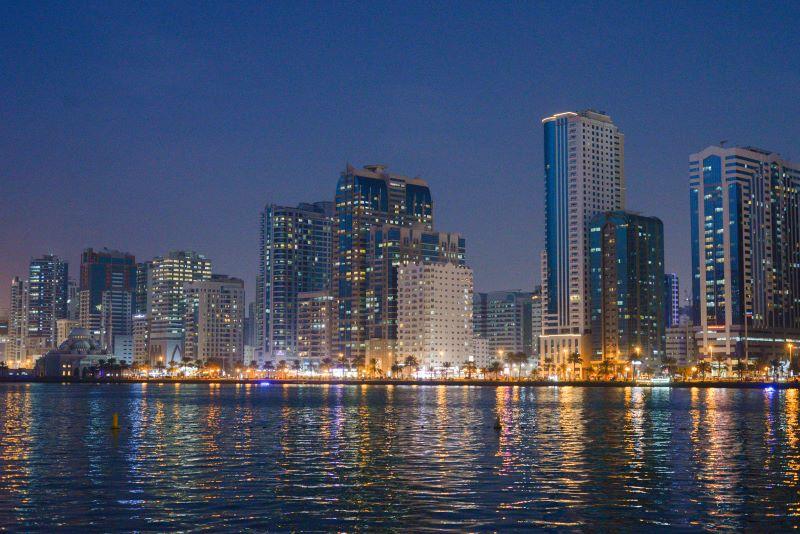
The conflict in the Middle East has been one of the most significant disruptors of global trade and economy. The location of GCC at the heart of the conflict has exposed the region to severe physical and economic risks, creating an environment of uncertainty. Within this environment, the region’s vital real estate sector is acutely vulnerable. Since hubs like Dubai, Riyadh, and Doha rely heavily on foreign direct investment, international capital, and expatriate demand, any disruption to global trade directly constricts these financial pipelines.
Furthermore, supply chain bottlenecks affect the import of essential construction materials, technology, and specialised labour, driving up development costs and delaying project timelines. Considering real estate’s deep integration with global capital flows, supply chains, and investor sentiment, closely analysing these interconnected global and regional variables is critical for effective risk management.
Booming Market
Notably, the regional real estate market entered this period of geopolitical conflict from a position of strength, with supply and demand showing strong momentum. Dubai recorded more than 270,000 property transactions worth AED 917 billion in 2025, while Saudi-listed real estate companies posted a sharp rebound in Q3 2025 profitability, with earnings rising to around SAR 1.86 billion. Riyadh also recorded approximately 13,000 home sales during the quarter, up 19% quarter on quarter, despite weaker year-over-year volumes due to affordability pressures.
Initial Market Shock and Behavioural Response
The onset of the conflict saw an immediate adjustment on the demand side, as weak buyer confidence led to a decline in transaction activity. Liquidity deployment also slowed temporarily, reflecting a more cautious investment stance across real estate markets. However, the downturn appeared behavioural rather than structural. Rather than cancelling investments altogether, buyers largely chose to postpone transactions until visibility improved:
- Transaction Shifts - In Dubai, transaction volumes declined by 24% between January and March 2026, falling from 17,394 in January to 13,241 in March. This moderation reflected more staggered decision-making, firmer price negotiations, and reduced discretionary investment activity.
- Early Signs of Bounce Back - Momentum quickly rebounded as early April data showed transactions increasing from 6,091 in mid-March to 7,284 in mid-April. Overall, the pattern points to a temporary delay in capital deployment rather than a weakening of underlying demand.
Supply-Side Resilience and Developer Caution
While active construction pipelines did not collapse, largely as ongoing projects were insulated by committed capital, the developers adopted a measured approach to new ventures:
- Pausing New Launches - Developers temporarily halted new launches due to heightened uncertainties surrounding pricing, shifting demand, and rising costs in building materials (particularly for steel, cement, and energy-driven inputs).
- Pipeline Replenishment Slowdown - This risk-off stance has led to a temporary slowdown in future inventory replenishment, as developers adopted a cautious stance and delayed investment decisions amid unclear market conditions.
Initial Resilience and Supply-Side Adaptation
Despite regional geopolitical pressures and the temporary closure of the Strait of Hormuz, GCC markets demonstrated strong resilience through agile supply-side coordination and infrastructure mobilisation. The establishment of the UAE–Oman green corridor ensured the uninterrupted movement of essential cargo, while Saudi Arabia reinforced regional logistics capacity by deploying a fleet of 500,000 trucks and activating integrated cargo corridors linking ports, airports, industrial cities, and logistics hubs.
Through July 2026, Saudi Arabia’s Red Sea network showed strong recovery. Jeddah Islamic Port hit a monthly record of 540,107 TEUs, DP World’s South Container Terminal handled over 221,200 TEUs, and H1 2026 volumes surged nearly 79% year-over-year.
Emerging Maritime Disruptions
Resurgent conflict in Yemen and the Houthis’ July 2026 maritime embargo on Saudi-linked shipping have severely restricted access to Saudi Red Sea ports. By mid-September, 2026 daily vessel traffic through the Bab el-Mandeb Strait plummeted 88% (from 33 down to four vessels a day), and container-ship traffic dropped 86% below the daily average.
Mitigation and Future Outlook
Shipping operators and Saudi authorities are responding by diverting selected cargo through the Suez Canal and recalibrating routes to preserve global market access. While these adaptations are ongoing, they require time to fully offset established supply chain disruptions, potentially leading to short-term delays in construction materials and critical goods that could impact active real estate and infrastructure projects.
Demand-Side Growth and Policy Measures in the UAE
On the demand side, the UAE introduced a series of policy measures in April 2026 that reinforced investor confidence and broadened market accessibility despite regional uncertainty. Dubai removed the AED 750,000 minimum property threshold for investor visas and introduced a lower AED 400,000 per-investor requirement for jointly owned properties, significantly reducing entry barriers for buyers and expanding the pool of eligible investors.
At the premium end of the market, the Golden Visa programme continued to support long-term residency through property investment, while relaxed upfront payment requirements improved accessibility for high-net-worth buyers. Furthermore, the integration of property and residency services into a unified digital platform by the GDRFA (General Directorate of Residency and Foreigners Affairs) and the Dubai Land Department has significantly streamlined the transition from property purchase to residency. These pro-growth initiatives were quickly reflected in market activity, with customer conversions in Dubai’s property sector reportedly tripling following the ceasefire announcement, while the office market recorded occupancy levels near 95% and a 14% annual increase in average rents—clear indicators of returning investor demand and renewed corporate confidence.
Future Outlook
Short Term
If the conflict subsides within a month, the recent slowdown will likely remain a short-lived interruption rather than a lasting drag on market fundamentals. A swift de-escalation would help normalise trade routes and reduce pressure on freight, insurance, and energy costs, allowing construction input inflation to ease and improving visibility on project delivery timelines. On the demand side, clearer geopolitical conditions would likely release pent-up investor demand, particularly in markets such as Dubai, where much of the recent weakness appears to have been driven by delayed decision-making rather than cancelled purchases. Combined with supportive policy measures and already resilient occupier fundamentals, this could lead to a relatively quick rebound in transaction activity, renewed project launches and firmer pricing momentum across core GCC real estate markets.
Long Term
Conversely, in a worst-case scenario where the conflict extends for several more months, the current slowdown could evolve from a temporary pause into a more structural downturn. Prolonged disruption to the Strait of Hormuz and wider regional trade routes would keep energy, freight, and insurance costs elevated, feeding through into higher prices for steel, aluminium, cement, and other construction inputs.
This would compress developer margins, delay new project launches, and increase the risk of construction slippages on projects dependent on imported materials and equipment. At the same time, sustained geopolitical uncertainty could weaken foreign investor sentiment, tighten financing conditions, and prolong the decline in transaction volumes, particularly in discretionary and premium segments. While core markets such as Dubai and Riyadh would likely remain more resilient than the broader region, a drawn-out conflict would raise the risk of softer price growth, longer sales cycles, and a more cautious investment environment across GCC real estate markets.
