
Europe’s Construction Capacity Crunch
Published on 03 Nov, 2026
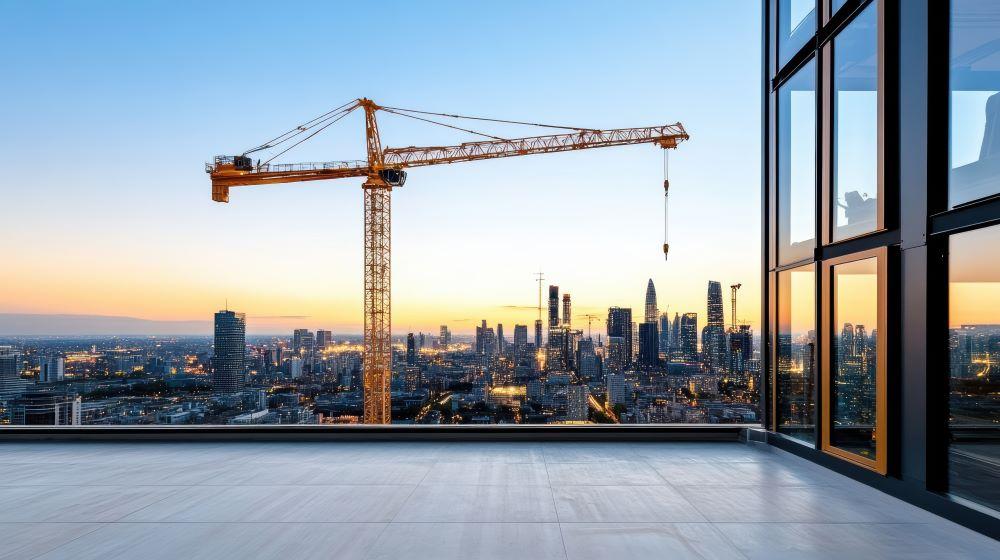
Europe’s construction sector is undergoing a period of change, with new projects emerging alongside an evolving workforce and skill profile. The sector finds itself at the center of several competing pressures. Housing shortages requires new construction, while climate targets necessitate widespread renovation and energy efficiency retrofits. Public investment continues to support infrastructure and sustainability related projects, even as widespread labour shortages limit output for many construction firms. Higher material costs and regional market disparities across Europe add further complexity.
“Europe’s transition to climate neutrality is reshaping parts of its industrial base and labour markets.”
~ European Environment Agency
Europe’s construction market is showing signs of an uneven recovery. In 2025, the country’s construction investments fell 2.1% (from 2.5% in 2024).
In 2026, the construction output across major European countries is expected to grow by 2.0%, followed by 1.9% growth in 2028. Building activity is expected to drive this recovery -
- New housebuilding1 is forecast to grow by 5.1% in 2026, supported by improving demand and financing conditions.
- Renovation2 (1.3%) and non-residential3 construction (1.4%) are also expected to grow, but at a slower pace.
- Civil engineering4 remains the strongest segment, supported by transport, energy, and water infrastructure projects.
1 - Individual dwellings, apartment blocks, social housing, schemes
2 - In housing
3 - Offices, hospitals, hotels, schools, industrial buildings
4 - Roads, railways, bridges, tunnels, concrete structures, special foundations, electrical works, water supply, wastewater treatment, works on maritime or river sites
Country-wise performance is expected to vary widely. Ireland, Poland, the U.K., and Portugal are expected to perform relatively well through 2028, while Slovakia, Italy, and Belgium may see weaker growth. Spain and Portugal are expected to see broader growth, while Germany, France, Austria, and Italy continue to face weaker housing demand, higher costs, and financing constraints. Construction costs, financing conditions, administrative delays, and labor availability remain important factors for the sector.
The Labor Bottleneck
Labor is becoming a key constraint. The European Construction Industry Federation (FIEC)5 estimates that around 2mn additional construction workers may be needed by 2030. If planned construction, renovation, and energy-efficiency investments are fully delivered, this requirement could further increase.
5. FIEC: European Construction Industry Federation, representing Europe’s construction industry.
Across Europe, more than 93% of construction markets are experiencing significant labor deficits, particularly among electricians, bricklayers, carpenters, plumbers, pipe fitters, and structural metal workers. These roles are critical for renovation, energy-efficiency upgrades, and technically complex construction projects.
The scale of the shortage varies across countries, with Belgium facing an annual shortfall of blue-collar construction workers and France requiring substantial workers (~100,000) annually. Beyond recruitment, millions of existing workers will need training or reskilling to meet changing requirements in energy efficiency, renovation, and the circular economy.
An aging workforce adds further pressure as experienced workers approach retirement. The sector must replace departing workers while expanding capacity to meet future demand, making labor shortages a long-term structural challenge.
Material Market
As per EUROSTAT’s construction price data, the construction materials market is still dealing with the effects of the sharp cost increases witnessed post Covid-19.
In 2025, construction prices for new residential buildings were ~50% higher than in 2015. However, the annual increases of these prices have slowed from 6.9% in 2023 to just 1.3% in 2025, indicating easing cost pressures.
In 2026, material supply conditions improved but remain uneven and exposed to energy costs, raw-material prices, and trade conditions (Cement and Steel being particularly sensitive). The EU’s CBAM8 has added carbon-related costs (since January 2026) for imports of carbon-intensive materials such as cement, iron and steel alongside tighter EU trade measures for steel.
8. CBAM = Carbon Border Adjustment Mechanism, an EU policy that applies carbon cost to imports of carbon-intensive goods such as cement, iron, & steel
A visible shift is observed toward lower-carbon and recycled materials (crushed concrete, bricks, and other construction waste reused in new construction) and reclaimed steel (steel recovered from existing structures and reused). However, differences in standards, regulatory compliance, quality, and material availability continue to limit wider adoption.
Regional Divergence and Sectoral Shifts
Construction is shifting across markets and project types. Growing demand for data centers is increasing the need for specialized mechanical, electrical, and plumbing (MEP) skills. Power availability and delays in grid connections also influence where new data centers can be built.
Renovation remains a major priority. Around 75% of EU buildings have poor energy performance, yet only about 1% of buildings are renovated each year. The revised Energy Performance of Buildings Directive (EPBD)9 and national renovation plans aim to increase renovation. In 2026, all 27 EU Member States, including Germany, France, Italy, and Spain, faced infringement procedures10 for incomplete implementation of the revised EPBD.
9. EPBD: Energy Performance of Buildings Directive is the EU legislation covering buildings’ energy performance and renovation.
10. Infringement procedure: A formal European Commission process against an EU country for failing to comply with EU law.
Digital adoption is also uneven. While basic tools are widely used, advanced technologies like AI, IoT, VR, and 3D printing see lower uptake – despite European Investment Bank (EIB)11 findings showing that adopters achieve significantly higher productivity.
11. EIB: The European Investment Bank is the EU’s long-term financing institution.
Conclusion
Overall, 2026 shows an uneven recovery across Europe. The construction capacity crunch is causing longer project timelines, higher tender prices, delayed or redesigned projects, lower housing delivery, and risks to climate and energy-renovation targets.
Labor shortages remain a major constraint, limiting construction output and creating pressure on specialist skills needed for infrastructure, housing, renovation, and data centers.
In response , policy measures are focusing on increasing workforce availability and expansion - through vocational training, apprenticeships, qualification recognition, and labor mobility - alongside targeted EU support for digitalization and building renovation.
