
EU Plastic Tax Impact on the Packaging Industry
Published on 21 Oct, 2026
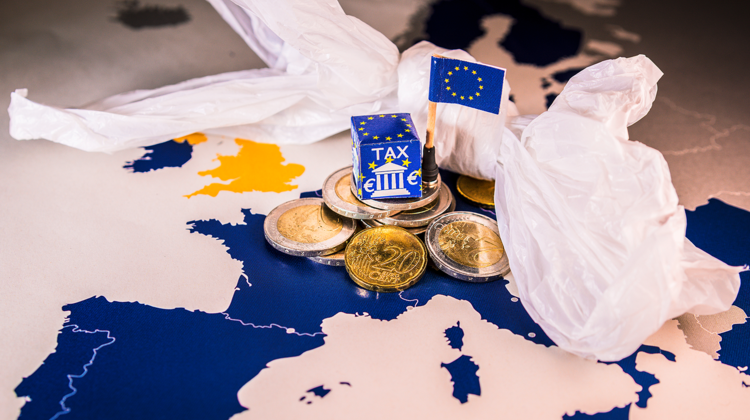
The EU plastic tax requires every member state to contribute to the EU budget based on the plastic packaging waste it fails to recycle. So far, Spain is the only member state to have passed this cost on to industry through a functioning national tax, with its plastic packaging tax in force since January 2023. Three years in, many companies are still paying more than they need to. Understanding the mechanics and levers to reduce exposure is now a commercial necessity.
How does the EU plastic tax work?
The logic is straightforward. Each year, countries pay EUR 0.80 per kg of plastic packaging waste that goes unrecycled: a levy introduced in January 2021 as part of the EU’s post-pandemic recovery financing. To push change further, the EU has proposed raising this to EUR 1.00 per kg from 2028. Although each EU Member State is liable for its share of the EU plastics levy, the approach to recovering this expense varies by country. Spain and Italy, for instance, have implemented domestic plastic taxes, while Germany has historically covered the contribution through general public revenues. The financial implications can extend beyond governments, potentially affecting producers, packaging suppliers and brand owners, with some of the additional costs ultimately being passed on to consumers. By tying payments directly to recycling performance, the EU plastic tax makes a country’s waste management record a matter of fiscal responsibility.
Regulatory context: From EU framework to national action
The EU has introduced multiple policy instruments to address packaging waste, including the plastics levy and the Packaging and Packaging Waste Regulation (PPWR). These measures aim to:
- Reduce dependency on virgin materials
- Improve recyclability
- Support the transition to a circular economy
While the EU plastics levy applies at the member state level, national governments determine how to implement corresponding measures. Spain has adopted a direct approach through Law 7/2022, introducing a EUR 0.45/kg tax on non-recycled plastic content in non-reusable packaging. This shifts the impact from public finance to corporate cost structures, directly affecting manufacturers, importers, and distributors.
Key features of the tax include:
- Applicability limited to non-recycled plastic content
- Proportional taxation of multi-material packaging
- Reduction in liability through certified recycled content
- Coverage of imports and intra-EU acquisitions
The taxable base is not the total weight of a package but only the plastic that cannot be certified as post-consumer recycled material. In a multi-material pack, such as a cardboard box with a plastic film window, only the plastic fraction is taxed, and certified recycled content reduces the charge further. The tax applies to Spanish manufacturers, EU companies acquiring plastic packaging for the Spanish market, and importers, including non-Spanish online retailers shipping directly to Spanish consumers. Non-resident companies must appoint a fiscal representative with the Spanish Tax Agency before their first taxable transaction, and taxpayers above the 5 kg per month threshold must file monthly or quarterly returns.
The scale of the tax is significant. Spain’s plastic levy was projected to generate ~EUR 724 million in its first year, underscoring the financial implications for industry participants.
How tax is reshaping the industry
The tax is accelerating material shifts that were already underway. For many companies, it provides a clear financial reason to move from sustainability goals to actual investment decisions. The impact is particularly visible in food packaging, where single-use plastic is widely used and tax exposure can build quickly. Egg packaging is a clear example. Plastic and polystyrene cartons are fully taxed at EUR 0.45/kg, while molded pulp cartons made from recycled paper are exempt. As a result, producers are increasingly shifting toward fiber-based alternatives.
A similar trend is emerging across other categories such as fresh produce trays, takeaway packaging, and beverage multipacks. In these cases, switching to fiber-based materials removes the tax entirely, making it a more straightforward and cost-effective option than reducing plastic content.
How to reduce tax exposure
There are two primary ways companies can reduce their tax burden. The first is increasing the use of certified recycled plastic. Spain’s tax is proportional, meaning the more recycled content used, the lower the tax.
The second lever is material substitution. Replacing plastic with fiber-based alternatives such as paper bags, molded pulp trays, or cardboard packaging eliminates the tax entirely. In many cases, this is becoming the more cost-effective option where performance requirements can be met. Compostable packaging that meets standards such as EN 13432 is also exempt. While still limited in use, it is gaining traction in segments like food service and fresh produce.
What comes next
Spain is unlikely to remain the only country with a plastic packaging tax. Italy is expected to introduce a similar tax levy in 2026, and Germany is also moving toward implementation.
At the EU level, regulations are tightening further. The PPWR, effective from 2026, will require all packaging to be recyclable and introduce minimum recycled content targets that increase over time. In parallel, the EU plastics levy is proposed to rise from EUR 0.80 to EUR 1.00/kg from 2028.
Overall, the direction is clear: the cost of using non-recycled plastic packaging in Europe will continue to increase alongside broader regulatory requirements. Companies that proactively assess their exposure, secure certified recycled materials, and plan material transitions will be better positioned than those reacting to future deadlines.
