
Cold Chain as a Service: A Gamechanger in Temperature-Controlled Logistics
Published on 15 Jun, 2026
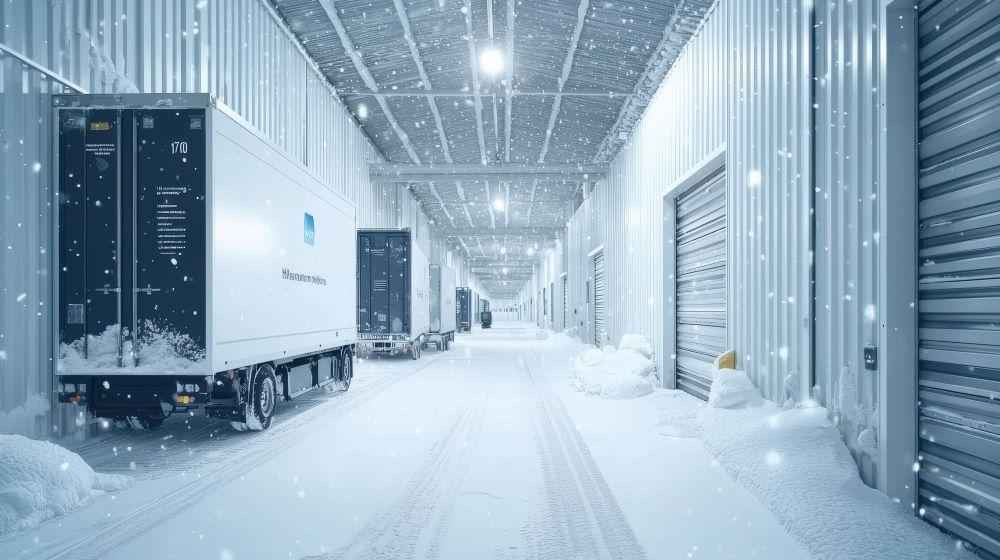
Maintaining the integrity of temperature-sensitive products, such as vaccines, fresh produce, dairy products, and specialty chemicals, has become more critical than ever. Traditionally, building and operating a cold chain network required significant investment in refrigerated storage, transportation, and monitoring systems. However, businesses are now exploring more flexible operating models that reduce infrastructure ownership costs while ensuring product safety and compliance.
What is Cold Chain as a Service?
CCaaS allows companies to outsource their cold chain infrastructure and operations to specialized service providers. Rather than owning refrigerated warehouses, delivery fleets, and monitoring systems, businesses access these capabilities on demand, paying for what they use, when they use it. Like Software as a Service, the model is predicated on ensuring quality and continuity from production to end delivery.
Key elements
The main elements of the CCaaS model are as follows:
- Pay-as-you-go model: Clients pay based on the usage, reducing the upfront capital expenditure
- End-to-end visibility: Real-time tracking using IoT sensors and cloud platforms
- Scalability: Capacity can be ramped up or down based on seasonal or regional demand
- Regulatory compliance: Services are aligned with the global standards for food and pharmaceutical safety
How CCaaS is Disrupting Traditional Cold Chains
Traditional cold chain models demand heavy capital investment and ongoing maintenance, locking businesses into inflexible infrastructure that struggles to respond to demand shifts. CCaaS resolves this by decoupling the logistics capability from asset ownership. Several converging trends are fueling their rise:
- Pharmaceutical Growth: The expansion of biologics, vaccines, and personalized medicine demands a reliable, validated cold chain solution. In 2024 alone, the USFDA approved 50 new molecular entities, of which 18 were biologics requiring specialized temperature-controlled handling.
- E-commerce and Q-commerce: Online grocery and rapid-delivery platforms depend on cold logistics that is both fast and flexible, especially for last-mile delivery
- Export-Oriented Agriculture: Fresh produce exporters in regions such as India, Southeast Asia, and Africa leverage outsourced cold chains to meet international quality and compliance standards
- Sustainability Pressures: CCaaS providers increasingly deploy energy-efficient systems and sustainable technologies, helping clients reduce emissions without major infrastructure investments
Use Cases & Success Stories
CCaaS is being adopted across multiple industries, with real-world deployments demonstrating measurable impact.
Pharmaceuticals
Companies such as AeroSafe Global have pioneered CCaaS for pharmaceutical logistics, providing end-to-end solutions ranging from customized packaging and pre-conditioning to in-transit monitoring and reconditioning. This enables manufacturers to ship biologics and other temperature-sensitive therapies without investing in proprietary logistics infrastructure.
Food & Retail
DHL Supply Chain has committed USD 2 billion to expand its healthcare-compliant cold storage and validated the global transport network. Retailers and food processors increasingly rely on such providers to manage seasonal demand spikes without maintaining underutilized refrigerated assets year-round.
Emerging Markets
In India, companies such as Snowman Logistics and ColdEX have expanded third-party cold chain services for their FMCG, dairy, and pharmaceutical clients. These providers enable exporters and manufacturers in Tier 2 and Tier 3 cities to access compliant cold infrastructure without significant capital investment.
Conclusion
The shift from asset ownership to service-based cold chain management is no longer a niche experiment; it is becoming a mainstream strategy. With the global cold chain logistics market on track to surpass USD 1 trillion by 2030, businesses that continue to treat refrigerated infrastructure as a fixed cost risk being outpaced by competitors who can scale faster and respond more nimbly to demand.
CCaaS improves reliability, reduces wastage, and supports regulatory compliance for pharmaceuticals, food processing, and agriculture while freeing capital for core business investment. The adoption of service-based models will only accelerate, as companies prioritize scalability, real-time visibility, and operational flexibility in increasingly complex supply chains.
How Aranca Can Help
Aranca helps organizations assess and capitalize on opportunities across the evolving cold chain ecosystem. Our capabilities span market intelligence, ecosystem mapping, competitive benchmarking, and commercial due diligence with specific experience in temperature-controlled logistics, food supply chains, and pharmaceutical distribution in the GCC, South Asia, and emerging markets.
Whether you are evaluating investment opportunities in cold chain infrastructure, identifying growth segments within the CCaaS space, or developing market entry and expansion strategies, Aranca provides data-driven insights to support informed, timely decision-making.

Aniruddha Kushe
