
AI-Defined Vehicles: The Next Shift After Software-Defined Cars
Published on 02 Nov, 2026
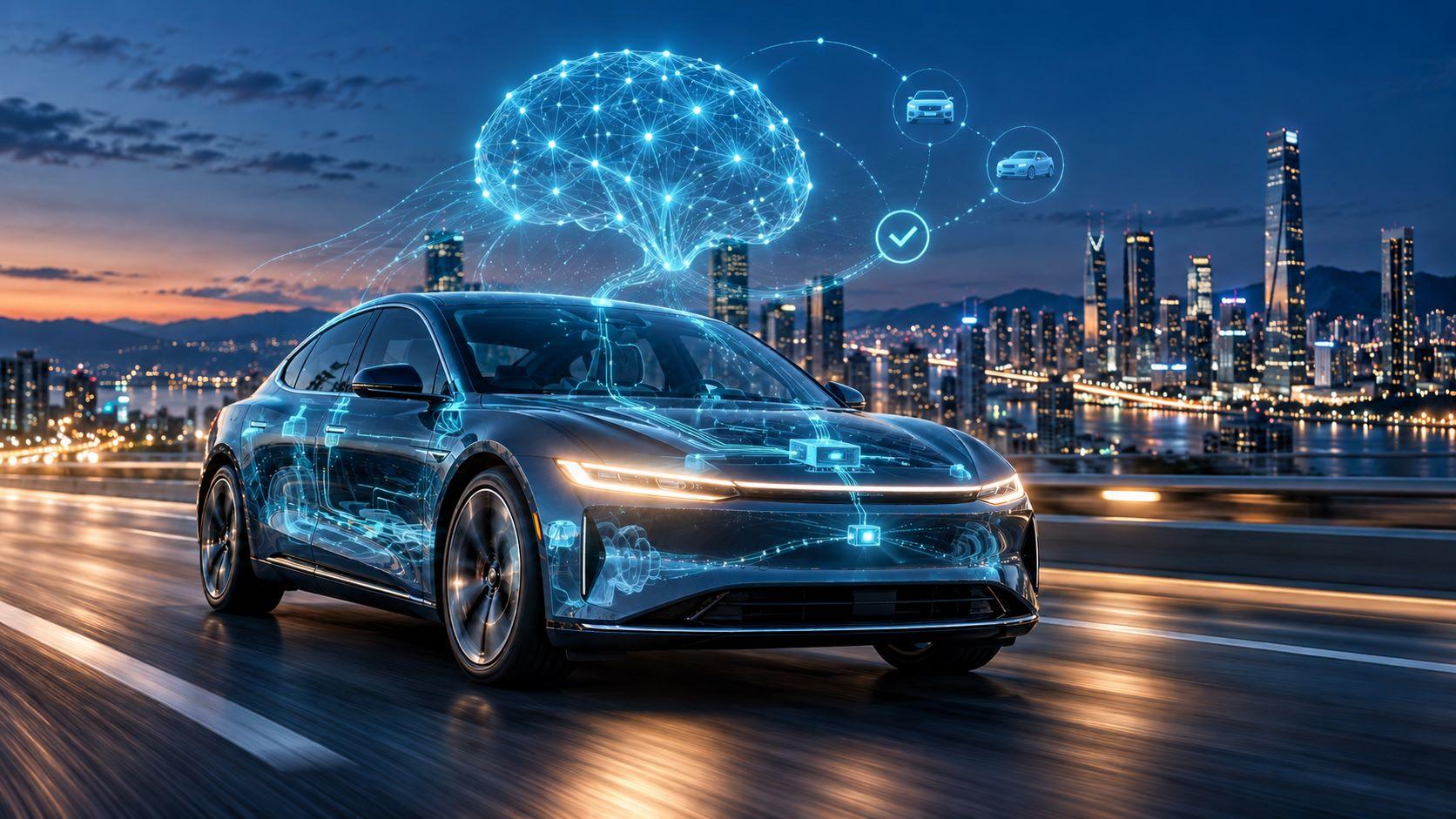
Automakers are moving toward AI-defined vehicles, where AI, fleet data and engineering capabilities enable vehicles to improve throughout their lifecycle and not just at the point of sale. This shift will change how the industry competes. The advantage will increasingly depend not on simply adding more AI features, but on how quickly and safely companies can identify, develop, validate, and deploy meaningful improvements. That puts engineering speed, data access, and safety validation at the center of strategy. For OEMs and suppliers, the question is shifting from “Can our vehicles be updated?” to “Which improvements will customers value and pay for, and what capabilities should we invest in to deliver them?”
Cars no longer stop improving when they leave the factory, thanks to software that can be updated remotely. Automakers can now add features, fix issues, and refine the driving experience without replacing hardware. Artificial intelligence (AI) creates another opportunity: learning from vehicles on the road to decide what to improve next.
The value goes beyond smarter voice assistants. Better driver assistance, personalization, and faster fixes could improve customer experience and create new service revenue. But AI also brings higher computing, data, and testing costs. Manufacturers need to ensure the benefits justify these added costs.
What makes an AI-defined vehicle different?
A growing number of new cars are built as software-defined vehicles (SDVs) that can receive over-the-air (OTA) updates. Some also have AI-powered driving features. An AI-defined vehicle (AIDV) goes further: road data shows engineers what to improve, and they turn it into tested software updates. It is a new way to build and run cars, not an official vehicle classification.
- Traditional vehicle: Features are largely set at the factory, and major changes often involve new parts or a workshop visit.
- Software-defined vehicle: A flexible software platform allows features and fixes to be delivered after sale.
- AI-defined vehicle: AI functions, fleet insights, and engineering tools work together to develop, validate, and deliver improved software versions.
Centralized computing, connected software, secure data collection, and OTA updates provide the SDV foundation. AIDVs build on this by using fleet data to guide engineering priorities and sending approved updates to the car.
How an AI-defined vehicle works
Three connected layers support this improvement process:
- AI inside the vehicle: Models support driver assistance, natural voice interaction, and personalization, while meeting the car’s computing and safety limits.
- AI across the fleet: Engineers identify relevant fleet data and find model weaknesses, then retrain and test models centrally. Approved versions are sent to vehicles over the air.
- AI in engineering: AI-assisted coding, simulation, and digital twins help teams develop and test updates, reducing rework and the need for some physical prototypes.
The cars themselves do not retrain their models on the road. Any change affecting vehicle behavior still needs engineering review, testing, and controlled release.
How automakers and suppliers are applying AI
- Mercedes-Benz: The Mercedes-Benz CLA, unveiled in March 2025, uses the Mercedes-Benz Operating System (MB.OS) and an AI-powered Mercedes-Benz User Experience (MBUX) assistant to offer more natural in-car conversations. This improves the driving experience, but an AI assistant alone does not create the complete AIDV system.
- Tesla: Fleet data helps Tesla identify challenging driving scenarios, improve model performance, and develop more effective software updates. It uses selected vehicle data for model training and testing before releasing updates over the air.
- XPENG: Its Vision-Language-Action (VLA) 2.0 assisted-driving model was rolled out to customers’ cars in 2026, combining road perception and driving decisions in a single AI model.
- NVIDIA: NVIDIA DRIVE Thor is a computing platform selected by BYD and Li Auto for future vehicle programs. Shared computing creates opportunities for suppliers in software integration and testing alongside hardware.
Why engineering speed matters
Frequent model updates shift the pressure to engineering, where development and testing take longest. Tests must cover rare driving situations, different vehicle models, and compatibility with existing software. Faster coding alone is not enough. Simulation, digital twins, and automated testing can help teams validate changes faster, but safety checks remain essential.
At AWS Summit Japan in 2026, Nissan and Applied Intuition used a test vehicle to show a faster software-development process. Audience members selected a change to the vehicle’s welcome sequence involving blinking lights. Engineers implemented, tested, and deployed it over the air, showing how connected tools can help original equipment manufacturers (OEMs) release software updates faster.
Where OEMs and suppliers should focus
For OEMs, applying AI in vehicles, across fleets, and in engineering leads to three investment priorities:
- Vehicle AI: Prioritize features that justify higher computing costs through better safety, convenience, or personalization.
- Fleet data: Collect relevant data with clear customer permission. Control of data and update decisions affects future product improvements and service opportunities.
- Engineering: Decide which tools to build, buy, or develop with partners. Track each release’s test cost, lead time, and recurring faults, not just the count of updates.
Suppliers can compete through specialist integration, validation, and data services that customers cannot easily replace. As models evolve, ongoing services could generate more supplier revenue than one-off hardware sales.
Safety and regulation will shape adoption
As AI takes over more driving decisions, OEMs need to show that their updates are safe before they reach customers. This requires difficult-scenario testing, clear model-version records, controlled rollouts, and a way to reverse faulty updates.
ISO/PAS 8800:2024 provides voluntary guidance on managing AI safety risks in road vehicles. UN Regulations R155 and R156 cover cybersecurity and software-update management, respectively, for vehicles in scope. These frameworks support safer deployment, but model-level and vehicle-level testing remain necessary.
Speed is only an advantage if each update can be tested properly and deployed safely at scale.
Conclusion
AI-defined vehicles could create revenue opportunities beyond the initial vehicle sale. OEMs can offer new services over a car’s life, while suppliers can earn from the ongoing work needed to develop and support them.
OEMs must decide which AI features to fund and which capabilities to build internally or source from partners. Suppliers should choose the services they will offer and the vehicle programs they will pursue.
How Aranca can help
Aranca helps OEMs, suppliers, and technology investors evaluate where AI-defined vehicles create commercial value. Our work includes technology landscaping, competitive benchmarking, partner and supplier screening, and commercial due diligence covering AI, vehicle software, and connected mobility.
We help clients decide which AI capabilities to develop internally, which to source from partners, and what investment is needed in data, engineering, and validation. This keeps each decision focused on customer value, cost, and long-term differentiation, not on technology adoption alone.

Akshay Kagale
