
From warehouses to algorithms: How data and AI are reshaping automotive aftermarket distribution
Published on 27 Oct, 2026
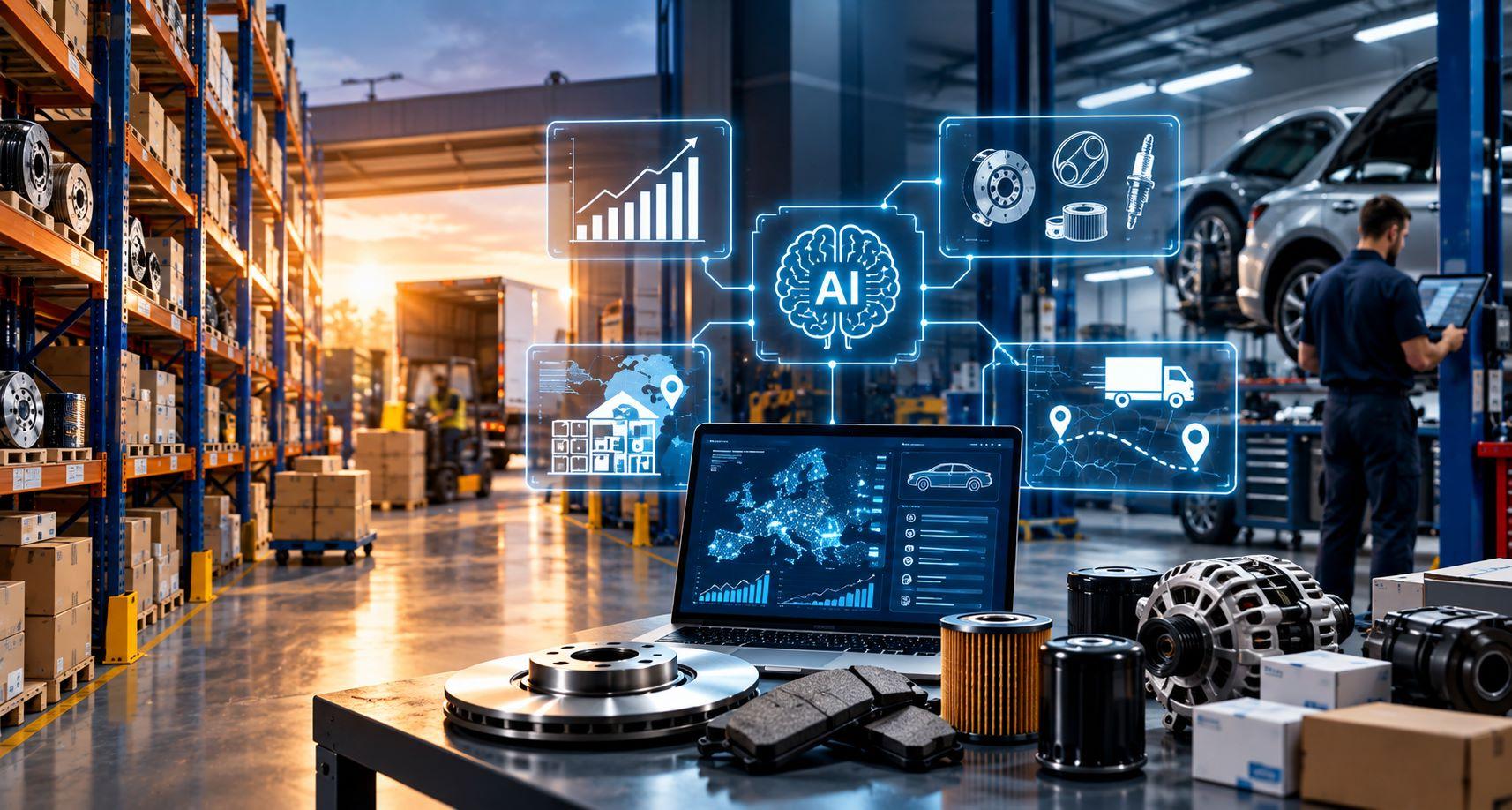
For years, aftermarket distributors competed on who could put the right part in the right place fastest. That equation is changing. The next phase of competition will be defined by something less visible: the quality and speed of decision-making. As the vehicle fleet ages, model complexity rises, and workshops expect digital-speed ordering, distributors are being pushed to improve availability while protecting margins. AI is already helping identify the right part, expose unmet demand, and optimize pricing by part and location. The strategic question is shifting from “How much inventory can we carry?” to “How intelligently can we decide what to carry, where to position it, and when to move it?
Warehouses and branch networks remain important in automotive aftermarket distribution. But having stock nearby is becoming less of a differentiator on its own. Distributors increasingly need to predict which part a workshop will need, where, and when.
The challenge is becoming more complex. The average US vehicle is now 12.8 years old, while the range of models, brands, and powertrains continues to expand. At the same time, workshops increasingly expect the speed, transparency, and convenience of digital ordering. For distributors, stocking every potential part across every branch is costly. Better demand planning can instead help position the right parts closer to the expected demand while limiting capital tied up in slow-moving inventory.
The physical network is becoming data-enabled
The traditional model was dependent on large inventories and experienced counter staff who knew which parts fitted each vehicle. This expertise still matters, but distributors can increasingly use sales, search, and vehicle data to guide stocking and pricing decisions.
LKQ Europe plans to reduce its stocked range from about 750,000 SKUs to 600,000 by the end of 2027, with no revenue impact reported so far. The strategy illustrates a broader shift: rather than maximizing the number of parts held across the network, distributors are increasingly using demand data to determine which parts to stock and where.
Four structural shifts are reshaping the aftermarket distribution
- Consolidation is raising the importance of scale: Inventory, delivery fleets, and IT infrastructure are expensive. Larger networks can spread costs across a broader order base, negotiate better terms, and invest in technology and data capabilities. Recent moves involving Genuine Parts, LKQ, and Advance Auto Parts reflect a broader push to optimize portfolios, improve efficiency, and strengthen returns. Mid-sized distributors may struggle to match larger rivals on range, although local service, specialist knowledge, and faster response can set them apart.
- Private labels are changing the economics of distributor–supplier relationships: As vehicles age, demand for non-original equipment (OE) parts becomes increasingly important, placing price greater emphasis on price, availability, and distributor choice. LKQ Europe is expanding its own brand range, while RIDEX is AUTODOC’s best-selling brand, illustrating how distributors and digital aftermarket players are using private labels to strengthen differentiation and margins. This also changes the distributor–manufacturer dynamic. Distributors remain an important route to market for manufacturers while increasingly using private labels to build their own customer base.
- Online ordering makes it easier to switch suppliers: Platforms such as PartsTech connect North American repair shops with multiple suppliers, while TecDoc provides shared product and vehicle data across Europe. When workshops compare availability, price, and delivery time in one place, accurate stock and fitment information becomes increasingly important in winning and retaining their business.
- Vehicle data could provide early signal of aftermarket demand: Connected cars can flag faults before a repair is booked, potentially giving distributors an earlier signal of the parts that may be required. Distributors with access to this information could potentially anticipate demand before it appears in traditional sales data. In Europe, the evolution of rules governing independent access to repair data will influence how broadly distributors and other aftermarket players can capture this opportunity.
Where AI can make a difference
As margins tighten and the cost of inventory and order errors increases, the value of better data becomes more tangible. LKQ Europe’s EBITDA margin fell to 7.5% in Q2 2026 from 9.4% a year earlier. At these levels, even incremental improvements in pricing, stock turns, or order accuracy can have a meaningful impact on profitability.
- Parts identification: Tools such as Partly’s automotive AI model help identify components using text and images, addressing one of the aftermarket’s persistent challenges of matching the right part to the right vehicle. Improved matching has the potential to reduce incorrect orders, returns, and repeat deliveries while improving the workshop experience.
- Demand forecasting: Uni-Select, now part of LKQ, has used Manhattan Associates’ machine learning tools to improve forecasting and inventory management, illustrating how predictive analytics can influence replenishment decisions. AI can help distributors identify unmet demand by tracking parts that workshops search for but cannot find in stock. By combining search data with inventory levels and completed sales, distributors can identify recurring stock gaps, prioritize replenishment, and convert missed sales opportunities into future revenue.
- Pricing: AI can help set prices by part and location, using demand, competitor prices, and customer needs. Distributors can stay price-competitive on high-demand parts while protecting margins on specialized components that are harder to source and critical for completing urgent repairs.
What distributors should do next
- Build the right data foundation: Large distributors need to connect their product catalogues, inventory, pricing, and order management systems before scaling AI. Acquisitions can expand their reach, but integrating different software platforms, product codes, and data formats is essential to realize the full benefits.
- Access capabilities beyond in-house technology: Smaller distributors do not need to build every capability themselves. Buying groups, shared catalogues, and specialist technology providers can give them access to better data, technology, and purchasing power. They can then differentiate through local service and expertise in EVs, newer Chinese vehicle brands, and commercial vehicles.
- Meet customers where they buy: As digital platforms make it easier for workshops to compare parts, prices, and availability across suppliers, distributors risk losing customers if their products are difficult to find or order. They need to connect with these platforms or offer a similarly convenient digital ordering experience.
- Turn data into better decisions: Technology alone will not create a competitive advantage. The real value lies in using reliable data to forecast demand, position inventory, set prices, and improve delivery. Ultimately, distributors that translate data into better day-to-day decisions will be better placed to compete than those simply investing in AI pilots.
How Aranca can help
Aranca helps parts manufacturers, distributors, and investors translate these shifts into market, growth, and investment decisions:
- Where to play: Market, segment, and vehicle parc analysis to identify demand and private label opportunities
- Whom to partner with or acquire: Distributor, digital platform and AI-provider screening, benchmarking, and commercial due diligence
- What customers value: Voice of Customer research with workshops and distributors covering ordering, service levels, pricing, and loyalty
- How you compare: Benchmarking of pricing, inventory, and digital capabilities against peers
Together, these insights help aftermarket players identify where to invest, whom to partner with, and which capabilities to build. Connect with our team to assess how these shifts could affect your aftermarket growth, investment, or competitive strategy.

Shrutika Godse
