




Japanese companies are increasingly looking beyond domestic markets to sustain growth, diversify revenue streams, and strengthen global competitiveness. With demographic shifts, domestic market maturity, and evolving technological capabilities, international expansion has become a strategic priority for many Japanese firms across sectors such as manufacturing, technology, automotive, healthcare, and consumer goods.
However, expanding internationally involves far more than exporting products. Businesses must navigate regulatory environments, cultural differences, supply chain complexities, and shifting economic landscapes. Organizations that approach global expansion strategically are more likely to capture sustainable growth opportunities and build resilient international operations.
This article outlines five key strategies that Japanese companies can use to expand business internationally, offering practical insights for organizations evaluating cross-border growth opportunities.
1. Conduct Comprehensive Market Research Before Entering New Markets
One of the most critical steps for Japanese companies seeking to expand internationally is conducting structured market research. Entering a foreign market without a clear understanding of customer demand, competitive dynamics, and regulatory frameworks can significantly increase the risk of failure.
Market research helps businesses identify attractive markets and determine whether their products or services are well suited to local demand. It also provides insights into pricing expectations, distribution channels, and customer behavior.
Key components of effective international market research include:
- Evaluating market size and growth potential
- Understanding customer needs and purchasing patterns
- Analyzing local competitors and market leaders
- Assessing pricing structures and cost expectations
- Identifying potential barriers to entry
By investing in market intelligence early, Japanese companies can make data-driven decisions about where and how to expand internationally.
2. Understand International Regulations and Compliance Requirements
International expansion requires careful attention to regulatory requirements. Trade regulations, import duties, environmental standards, and industry-specific compliance frameworks vary widely across countries.
Japanese exporters must ensure that their products meet the regulatory requirements of target markets before launching operations. Failure to comply with international regulations can lead to delays, penalties, or restricted market access.
Common regulatory areas that companies must evaluate include:
- Import and export regulations
- Product safety certifications
- Intellectual property protection
- Data protection laws
- Environmental and sustainability standards
Regulatory frameworks are also evolving rapidly. For example, changes in international trade agreements and environmental compliance rules can affect market entry strategies.
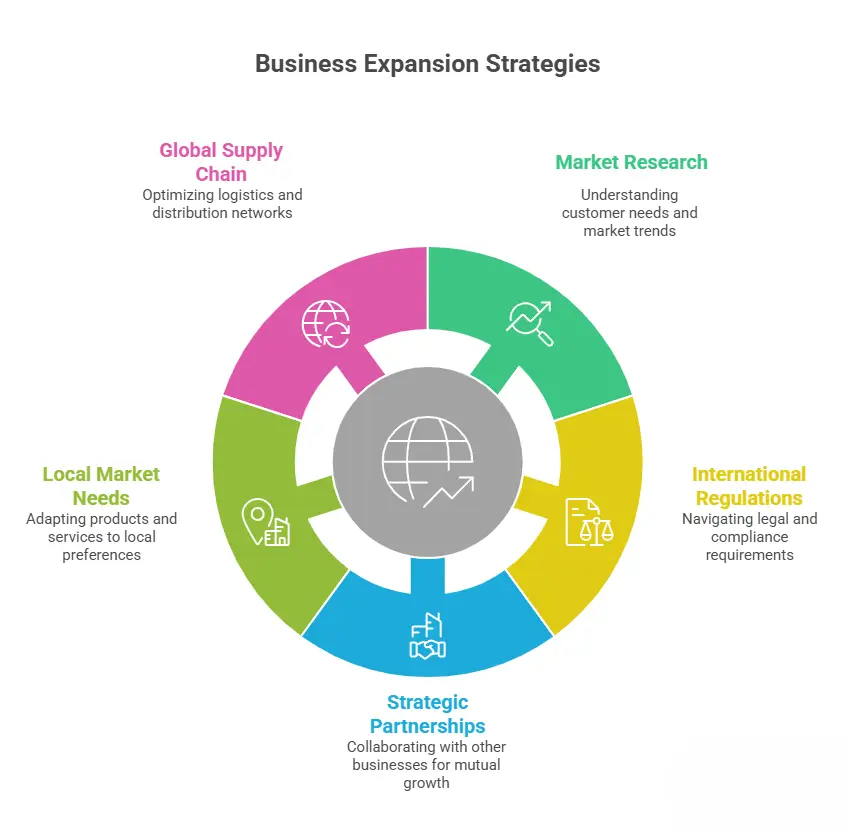
3. Build Strategic Partnerships in Target Markets
Local partnerships can significantly accelerate international expansion for Japanese companies. Collaborating with local distributors, suppliers, or joint venture partners allows businesses to gain access to established networks, market knowledge, and operational infrastructure.
Strategic partnerships help companies overcome challenges such as:
- Cultural and language barriers
- Limited local market knowledge
- Distribution channel complexity
- Regulatory navigation
For example, many Japanese manufacturing firms entering Southeast Asia partner with local distributors who understand regional procurement processes and customer expectations.
Successful partnerships typically involve:
- Clearly defined responsibilities
- Transparent communication channels
- Shared strategic objectives
- Strong governance structures
Developing strong partnerships can shorten market entry timelines and improve long-term business performance.
4. Adapt Products and Business Models to Local Market Needs
Another critical strategy for Japanese companies expanding internationally is adapting their offerings to local market conditions. Products and services that succeed in Japan may require adjustments to meet the preferences, regulatory requirements, and price expectations of foreign markets.
Localization can involve several aspects of the business model, including:
- Product features and specifications
- Packaging and branding
- Pricing strategies
- Customer support models
- Distribution channels
For example, consumer electronics companies often modify product designs to match local voltage standards or consumer preferences. Similarly, food and beverage companies frequently adjust ingredients and flavor profiles to appeal to regional tastes.
Companies that prioritize localization can build stronger relationships with international customers and improve brand acceptance in new markets.
5. Strengthen Global Supply Chain and Operational Capabilities
International expansion requires reliable supply chain and operational infrastructure. Japanese companies must ensure that manufacturing, logistics, and distribution systems can support cross-border operations efficiently.
Key considerations include:
- Supplier reliability and sourcing diversification
- Logistics and transportation networks
- Inventory management across multiple markets
- Currency risk management
- Local production or assembly options
Developing a flexible supply chain helps organizations respond quickly to market changes and minimize disruption risks.
Many Japanese companies expanding internationally also invest in regional hubs to coordinate operations across multiple markets. These hubs support activities such as procurement, customer support, and regulatory compliance.
Also Read: How International Regulations Affect Japanese Exporters in 2026Key Challenges Japanese Companies Face in International Expansion
Despite strong opportunities, international expansion can present several challenges. Japanese companies must carefully evaluate risks and develop mitigation strategies.
Common challenges include:
- Regulatory complexity in foreign markets
- Cultural differences in business practices
- Supply chain disruptions
- Currency fluctuations
- Political and economic uncertainty
Organizations that plan proactively and build strong local partnerships can reduce these risks and improve the likelihood of successful international expansion.
Conclusion
International expansion represents a significant growth opportunity for Japanese companies seeking to diversify revenue and strengthen their global presence. However, successful expansion requires careful planning, deep market insights, and the ability to adapt strategies to local conditions.
By focusing on structured market research, regulatory compliance, strategic partnerships, localized offerings, and resilient supply chain operations, Japanese companies can build sustainable international businesses.
As global competition intensifies and markets evolve, organizations that adopt a strategic approach to global expansion will be better positioned to capture new opportunities and drive long-term growth.