

Aranca for ESG Strategy and Reporting
CSRD is in force. IFRS S1 and S2 are becoming the global baseline. Investors are stress-testing transition plans. Auditors review climate disclosures with the same rigour as financial statements. We help organizations build materially grounded strategies, quantify climate risk with the financial depth regulators require and produce ESG disclosures that are accurate, audit-ready and aligned with every framework that matters.
One data architecture designed for multiple framework outputs
We design integrated reporting architectures that collect ESG data once and map it simultaneously to CSRD, IFRS S1 and S2, GRI and TCFD, producing consistent auditable outputs.
Disclosure that communicates, not just complies
Producing accurate ESG data is the floor. Through our specialist editorial and design division, we produce sustainability communication that holds up analytically and lands with stakeholders.
Climate risk quantified to the financial statement
IFRS S2 requires financial impact quantification. We model the revenue exposure, asset impairment potential and stranded asset risk climate scenarios imply for your specific asset base.
ESG ratings improvement targeted at what actually moves the score
We work backwards from each ratings agency's scoring methodology to identify the precise disclosure and governance changes that will move the needle on the specific indicators that matter.
ESG Strategy, Climate Risk and Reporting Solutions
Our three solution areas address the complete ESG strategy and disclosure challenge from building the strategic foundation and assessing climate risk through to producing the disclosures that satisfy your most demanding regulatory and investor obligations.
ESG Strategy Development and Organizational Transformation
Build a sustainability strategy that is commercially grounded, operationally embedded and specific enough to act on. One that your board endorses, your operations can execute and your stakeholders will believe.
- ESG baseline assessment.
- Double materiality assessment covering both financial and impact materiality.
- ESG goal setting and KPI framework design.
- ESG operating model and governance structure design.
- Sustainability transformation roadmap.
- Board and executive ESG advisory and decision support.
- ESG capacity building and training programmes.
Insights from our Industry Experts
Built by global experts, our insights are grounded in evidence and real world experience, helping you stay ahead.

Hydrogen Economy - Are Liquid Hydrogen Carriers the answer?
Hydrogen, despite being the smallest and the lightest of all elements, is difficult to transport. Amid its rising popularity as an alternative fuel, the logistics of delivery and storage pose a concern.

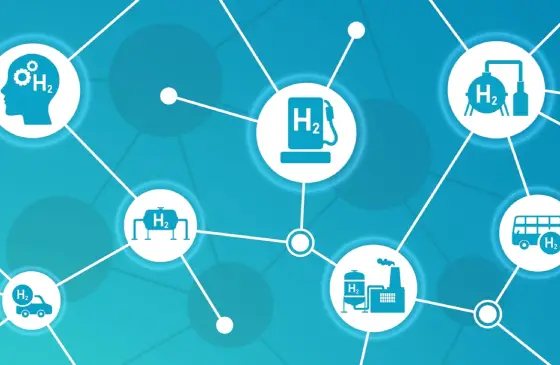
Hydrogen Economy - Prospects and Challenges
Climate change is a reality, necessitating the quick adoption of low carbon and renewable sources of energy. Hydrogen is one such source of clean energy which has the potential to transform industries.

Hydrogen Storage in Solid State
The adverse effect of climate change has become more widespread in recent years. One of the main solutions to control this disaster is to shift focus toward clean sources of energy such as hydrogen.
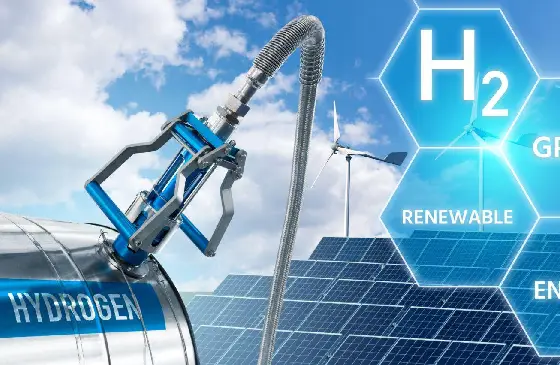
Green Hydrogen in Circular Economy
The urgent need to reduce greenhouse gas emissions has prompted countries worldwide to commit to net-zero targets, driving the rapid adoption of low-carbon and renewable energy sources.

Green Steel: How one of the world's most emission intensive industry plans to decarbonize
Steel is the backbone of societies, buildings, equipment and infrastructure across the globe. It is used in the manufacturing of a range of products, from cars and machines to construction materials for our offices and homes, thereby forming a critical element of contemporary life.
What is a double materiality assessment and is it required under CSRD?
A double materiality assessment evaluates sustainability topics from two perspectives simultaneously: impact materiality, meaning the significance of the organization's positive and negative impacts on people and the environment, and financial materiality, meaning the significance of sustainability risks and opportunities that affect the organization's financial performance. Under CSRD, double materiality assessment is mandatory.
It requires structured stakeholder engagement, a systematic assessment process and documented evidence that can withstand auditor review. Organizations that approach it as a compliance exercise typically produce assessments challenged during assurance. Those that treat it as a strategic foundation typically find it generates genuinely useful prioritisation insights.
What is the difference between CSRD, IFRS S1 and S2, and GRI?
GRI is a voluntary global framework for sustainability reporting, widely used as the baseline for ESG disclosure globally but not legally mandatory in most jurisdictions. CSRD is the EU's mandatory sustainability reporting directive applying to large EU companies on a phased timeline, with reporting requirements defined by the European Sustainability Reporting Standards. IFRS S1 and S2 are the ISSB standards, a global baseline adopted by regulators in the UK, Australia, Canada, Japan and many other jurisdictions.
The frameworks that apply to your organization depend on your legal domicile, listing status, revenue size and the regulatory requirements of the markets in which you operate. Many organizations are subject to multiple frameworks simultaneously, which is why an integrated reporting architecture that maps a single data set to multiple frameworks is the practical approach.
How do you improve an ESG rating with MSCI or Sustainalytics?
ESG ratings agencies score organizations against their own proprietary methodologies, which weight different indicators differently. Improving a rating requires first understanding which specific indicators are dragging the score down relative to sector peers, then determining whether the underlying performance gap is real or a disclosure gap, and addressing whichever it is with targeted action.
Broad disclosure improvements rarely move ratings efficiently. The most effective approach works backwards from the scoring methodology of each agency, identifying the precise changes in governance, policy documentation, quantitative data disclosure or management systems that will move the needle on the specific indicators with the highest weighting in that agency's model.
What does assurance readiness mean and why does it matter now?
Assurance readiness means having the data quality, methodology documentation, data governance controls, audit trail and internal review processes in place for a third-party auditor to provide a formal opinion on the accuracy of your sustainability disclosures. Under CSRD, limited assurance is mandatory from the first reporting year, with reasonable assurance required from 2028.
The organizations that struggle most with assurance are those that prepare for it retrospectively. The most efficient approach builds assurance-ready data controls into the reporting infrastructure from the outset, rather than retrofitting governance around data collected without audit requirements in mind.
How does climate scenario analysis work under TCFD and IFRS S2?
Climate scenario analysis requires organizations to evaluate their exposure to physical and transition risks across multiple recognized climate pathways, typically including a 1.5 degree Celsius scenario, a 2 degree scenario and a higher warming scenario, and to quantify the financial impact of those risks on revenue, costs, asset values and capital requirements.
The most common gap we see is organizations producing scenario narratives that describe climate risks qualitatively but cannot translate them into financial terms that investors and auditors can test. This is the standard the latest regulatory guidance is moving toward, and the organizations building that quantification capability now are ahead of the curve.
Frequently Asked Questions About ESG Strategy, Reporting and Compliance
For quick answers, visit our FAQ section. Can't find what you need? Contact our support team.

Let's Talk About Your Business Needs
Get In Touch
Have a project in mind or exploring support options? Share a few details and our team will connect with you to discuss requirements, timelines, and how we can help.

Send E-Mail

Send Us a Message

